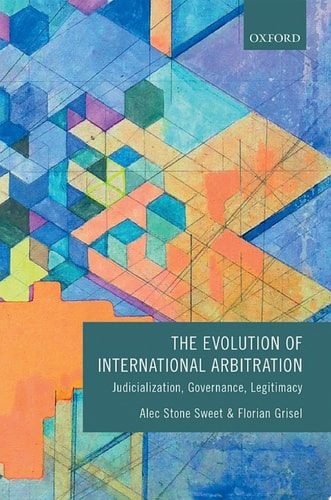
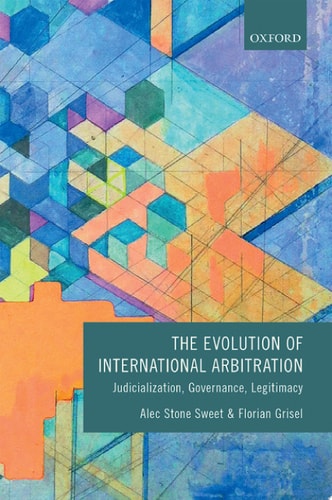
The Evolution of International Arbitration: Judicialization, Governance, Legitimacy
0
0
As an Amazon Associate and affiliate partner, Menrva Books earns from qualifying purchases. Learn more
Author Description
The development of international arbitration as an autonomous legal order comprises one of the most remarkable stories of institution building at the global level over the past century. Today, transnational firms and states settle their most important commercial and investment disputes not in courts, but in arbitral centres, a tightly networked set of organizations that compete with one another for docket, resources, and influence. In this book, Alec Stone Sweet and Florian Grisel show that international arbitration has undergone a self-sustaining process of institutional evolution that has steadily enhanced arbitral authority. This judicialization process was sustained by the explosion of trade and investment, which generated a steady stream of high stakes disputes, and the efforts of elite arbitrators and the major centres to construct arbitration as a viable substitute for litigation in domestic courts. For their part, state officials (as legislators and treaty makers), and national judges (as enforcers of arbitral awards), have not just adapted to the expansion of arbitration; they have heavily invested in it, extending the arbitral order's reach and effectiveness. Arbitration's very success has, nonetheless, raised serious questions about its legitimacy as a mode of transnational governance. The book provides a clear causal theory of judicialization, original data collection and analysis, and a broad, relatively non-technical overview of the evolution of the arbitral order. Each chapter compares international commercial and investor-state arbitration, across clearly specified measures of judicialization and governance. Topics include: the evolution of procedures; the development of precedent and the demand for appeal; balancing in the public interest; legitimacy debates and proposals for systemic reform. This book is a timely assessment of how arbitration has risen to become a key component of international economic law and why its future is far from settled.
Menrva's Summary
THE THESIS
This book investigates the mechanisms behind the rise of international arbitration as a dominant, autonomous legal order for resolving transnational commercial and investment disputes. Alec Stone Sweet and Florian Grisel, both scholars in law and political science, utilize a combination of original data collection and institutional theory to explain how arbitration evolved from a niche practice into a central pillar of global economic governance. They argue that this process of judicialization was driven by the interplay between elite arbitrators, competing arbitral centers, and state officials who facilitated the expansion of arbitral authority.
THE SCOPE MAP
What You Will Find
- A causal theory of judicialization within international legal systems.
- Comparative analysis between international commercial arbitration and investor-state arbitration.
- Examination of procedural evolution, the demand for precedent, and the role of national courts in enforcing awards.
- Discussion of legitimacy crises and proposed systemic reforms.
Scope Limits
- The text focuses primarily on the institutional and structural evolution of the system rather than providing a technical manual for practicing attorneys.
- It does not offer a comprehensive legal analysis of every individual arbitral award or specific jurisdictional nuance.
THE AUTHORITY PERSPECTIVE
Experts and legal scholars frequently cite this work as a foundational text for understanding the political and institutional dynamics of international arbitration. Readers often note that the prose remains accessible to non-specialists while providing the rigorous analytical framework required for academic study.
Page Count:
269
Publication Date:
2017-01-01
Publisher:
OUP Oxford
ISBN-10:
0191060240
ISBN-13:
9780191060243
Economics
Law
Governance
International Law
Arbitration
Professional Career & Trade
Community Tags
Similar Books

Reader Comments
Share Your Thoughts
No comments yet. Be the first to share your thoughts!