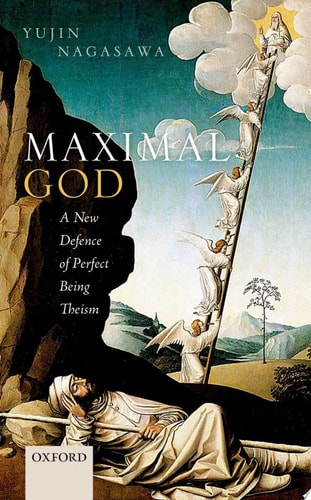
Maximal God
0
0
As an Amazon Associate and affiliate partner, Menrva Books earns from qualifying purchases. Learn more
Author Description
Yujin Nagasawa Presents A New, Stronger Version Of Perfect Being Theism, The Conception Of God As The Greatest Possible Being. Although Perfect Being Theism Is The Most Common Form Of Monotheism In The Judeo-christian-islamic Tradition Its Truth Has Been Disputed By Philosophers And Theologians For Centuries. Nagasawa Proposes A New, Game-changing Defence Of Perfect Being Theism By Developing What He Calls The 'maximal Concept Of God'. Perfect Being Theists Typically Maintain That God Is An Omniscient, Omnipotent, And Omnibenevolent Being; According To Nagasawa, God Should Be Understood Rather As A Being That Has The Maximal Consistent Set Of Knowledge, Power, And Benevolence. Nagasawa Argues That Once We Accept The Maximal Concept We Can Establish Perfect Being Theism On Two Grounds. First, We Can Refute Nearly All Existing Arguments Against Perfect Being Theism Simultaneously. Second, We Can Construct A Novel, Strengthened Version Of The Modal Ontological Argument For Perfect Being Theism. Nagasawa Concludes That The Maximal Concept Grants Us A Unified Defence Of Perfect Being Theism That Is Highly Effective And Economical.
Menrva's Summary
THE THESIS
Can the traditional conception of God as a perfect being be defended by redefining divine attributes through a maximal consistent set of knowledge, power, and benevolence? Yujin Nagasawa, a professor of philosophy, utilizes analytic philosophy and modal logic to address long-standing critiques of Perfect Being Theism. He argues that by shifting from an absolute interpretation of omniscience, omnipotence, and omnibenevolence to a maximal consistent set, one can resolve historical logical contradictions inherent in traditional monotheistic definitions.
THE SCOPE MAP
What You Will Find
- A formal definition of the 'maximal concept of God' framework.
- A systematic refutation of classical arguments against Perfect Being Theism.
- A reconstructed version of the modal ontological argument.
Scope Limits
- The text does not provide a sociological or historical analysis of religious practice.
- It does not address non-theistic or polytheistic theological frameworks.
THE AUTHORITY PERSPECTIVE
Scholars in the field of philosophy of religion recognize this work as a rigorous contribution to analytic theology. Readers frequently note the technical density of the prose, which requires a foundational understanding of modal logic and contemporary metaphysical discourse.
Page Count:
256
Publication Date:
2017-01-01
Publisher:
Oxford University Press
ISBN-10:
0191076422
ISBN-13:
9780191076428
Philosophy
Religion
Theology
Metaphysics
Monotheism
Community Tags
Similar Books