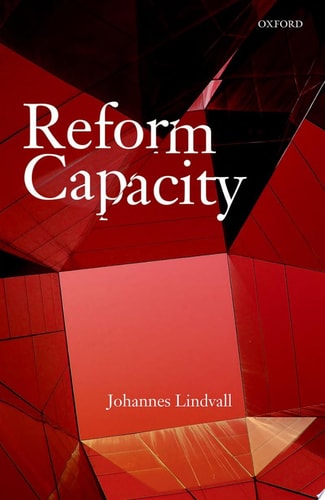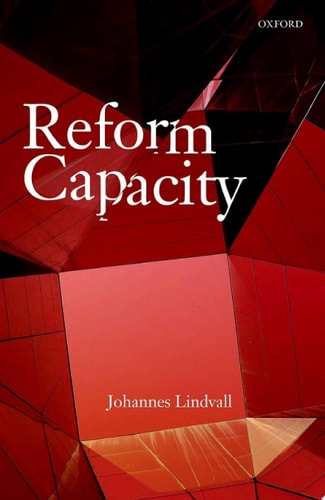
Reform Capacity
0
0
As an Amazon Associate and affiliate partner, Menrva Books earns from qualifying purchases. Learn more
Author Description
It is often said that effective government requires a concentration of power. If we want our political leaders to adjust public policies to changing economic, social, and political circumstances, we should, in this view, leave our leaders alone: we should put in place electoral procedures that identify a clear winner in each election, and then we should let the winning political party govern without having to cooperate with others. The argument of this book is that this view is mistaken, since it seriously underestimates the ability of political decision makers to overcome democratic paralysis by compensating losers (groups that stand to lose from a reform). Reform capacity - the ability of political decision makers to adopt and implement policy changes that benefit society as a whole - can therefore be achieved in both power-concentration systems (which enable governments to ignore losers) and power-sharing systems (where governments build support for reform by compensating losers). If political decision makers are able to solve the bargaining problems that sometimes complicate negotiations between winners and losers, power-sharing systems have certain advantages over power-concentration systems. The book argues that power sharing can lead to high reform capacity in societies where interest groups are powerful enough to block reforms; the book also argues that power sharing can lead to high reform capacity when reforms have short-term costs and long-term benefits, since power sharing helps to correct some of the short-sightedness that is inherent in democratic policymaking.
Menrva's Summary
THE THESIS
This book investigates whether the concentration of power is a necessary condition for effective government and the implementation of policy reform. Johannes Lindvall, a scholar of political science, challenges the conventional wisdom that power-sharing systems are inherently paralyzed by democratic friction. By analyzing the mechanisms of political bargaining, he argues that governments can achieve high reform capacity by strategically compensating groups that would otherwise oppose policy changes, thereby mitigating the short-sightedness often found in democratic decision-making.
THE SCOPE MAP
What You Will Find
- A comparative analysis of power-concentration versus power-sharing political systems.
- Theoretical frameworks regarding bargaining problems between winners and losers of policy reforms.
- Examination of how interest groups influence the adoption of long-term policy benefits.
Scope Limits
- The text does not provide a prescriptive manual for specific legislative tactics.
- It does not cover non-democratic or authoritarian governance models.
THE AUTHORITY PERSPECTIVE
Scholars in political economy identify this work as a significant contribution to the debate on institutional design and democratic efficiency. Readers frequently note the academic density of the prose, which is intended for an audience familiar with comparative politics and institutional theory.
Page Count:
173
Publication Date:
2017-01-01
Publisher:
OUP Oxford
ISBN-10:
0191079464
ISBN-13:
9780191079467
Comparative Politics
Public Policy
Public Administration
Democracy
Government