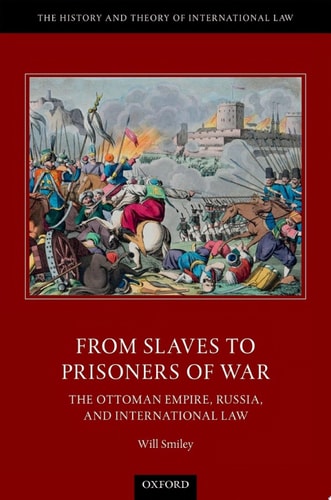
From Slaves to Prisoners of War: The Ottoman Empire, Russia, and International Law
0
0
As an Amazon Associate and affiliate partner, Menrva Books earns from qualifying purchases. Learn more
Author Description
The Ottoman-Russian wars of the eighteenth century reshaped the map of Eurasia and the Middle East, but they also birthed a novel concept - the prisoner of war. For centuries, hundreds of thousands of captives, civilians and soldiers alike, crossed the legal and social boundaries of these empires, destined for either ransom or enslavement. But in the eighteenth century, the Ottoman state and its Russian rival, through conflict and diplomacy, worked out a new system of regional international law. Ransom was abolished; soldiers became prisoners of war; and some slaves gained new paths to release, while others were left entirely unprotected. These rules delineated sovereignty, redefined individuals' relationships to states, and prioritized political identity over economic value. In the process, the Ottomans marked out a parallel, non-Western path toward elements of modern international law. Yet this was not a story of European imposition or imitation-the Ottomans acted for their own reasons, maintaining their commitment to Islamic law. For a time even European empires played by these rules, until they were subsumed into the codified global law of war in the late nineteenth century. This story offers new perspectives on the histories of the Ottoman and Russian Empires, of slavery, and of international law.
Menrva's Summary
THE THESIS
This work investigates how the eighteenth-century conflicts between the Ottoman and Russian Empires catalyzed the transition from systems of enslavement and ransom to the modern legal framework of the prisoner of war. Will Smiley, a historian specializing in Ottoman and Islamic law, utilizes archival diplomatic records and legal treatises to argue that this regional shift was an indigenous development rather than a product of Western imposition. He demonstrates how these empires prioritized political sovereignty and state identity over the traditional economic valuation of captives.
THE SCOPE MAP
What You Will Find
- Analysis of eighteenth-century Ottoman-Russian diplomatic treaties and correspondence.
- Examination of the legal transition from ransom-based captive systems to state-sanctioned prisoner of war status.
- Discussion of the intersection between Islamic law and emerging international legal norms.
Scope Limits
- The study focuses primarily on the eighteenth-century regional context and does not provide an exhaustive history of global international law beyond the nineteenth-century codification.
THE AUTHORITY PERSPECTIVE
Scholars in the field of legal history and Ottoman studies identify this text as a significant contribution to understanding non-Western contributions to international law. Readers frequently note the academic density of the prose and the author's meticulous use of primary source documentation to challenge Eurocentric narratives.
Page Count:
304
Publication Date:
2018-01-01
Publisher:
OUP Oxford
ISBN-10:
0191088196
ISBN-13:
9780191088193
History
Ottoman Empire
Prisoners of War
International Law
Military History
Middle Eastern
Russian History