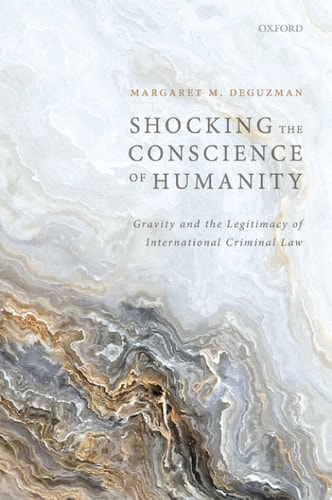
Shocking the Conscience of Humanity
0
0
As an Amazon Associate and affiliate partner, Menrva Books earns from qualifying purchases. Learn more
Author Description
The Most Commonly Cited Justification For International Criminal Law Is That It Addresses Crimes Of Such Gravity That They Shock The Conscience Of Humanity. From Decisions About How To Define Crimes And When To Exercise Jurisdiction, To Limitations On Defences And Sentencing Determinations, Gravity Rhetoric Permeates The Discourse Of International Criminal Law. Yet The Concept Of Gravity Has Thus Far Remained Highly Undertheorized. This Book Uncovers The Consequences For The Regime's Legitimacy Of Its Heavy Reliance On The Poorly Understood Idea Of Gravity. Margaret M. Deguzman Argues That Gravity's Ambiguity May At Times Enable A Thin Consensus To Emerge Around Decisions, Such As The Creation Of An Institution Or The Definition Of A Crime, But That, Increasingly, It Undermines Efforts To Build A Strong And Resilient Global Justice Community. The Book Suggests Ways To Reconceptualize Gravity In Line With Global Values And Goals To Better Support The Long-term Legitimacy Of International Criminal Law.
Menrva's Summary
THE THESIS
This book investigates how the concept of 'gravity'—the justification that certain crimes shock the conscience of humanity—functions as an undertheorized and potentially destabilizing pillar of international criminal law. Margaret M. deGuzman, a scholar in international criminal law, examines how this rhetorical device permeates legal discourse, from jurisdictional decisions to sentencing. She argues that while the ambiguity of gravity may facilitate initial consensus, its lack of clear definition ultimately threatens the long-term legitimacy of global justice institutions. The text proposes a framework to reconceptualize gravity to better align with consistent global values.
THE SCOPE MAP
What You Will Find
- Analysis of gravity rhetoric in international criminal tribunals and institutions
- Examination of legal decision-making processes regarding crime definition and jurisdiction
- Proposed normative frameworks for redefining gravity in international law
Scope Limits
- Does not provide a comprehensive history of every international criminal tribunal
- Does not offer a manual for courtroom litigation strategies
THE AUTHORITY PERSPECTIVE
Legal scholars and practitioners identify this work as a critical intervention in the study of international criminal law's foundational justifications. Readers frequently note the academic density of the prose, which is intended for an audience of legal professionals and students of international relations.
Page Count:
350
Publication Date:
2020-01-01
Publisher:
Oxford University Press
ISBN-10:
0191089389
ISBN-13:
9780191089381
Human rights
Legal Theory
International Law
Community Tags
Similar Books