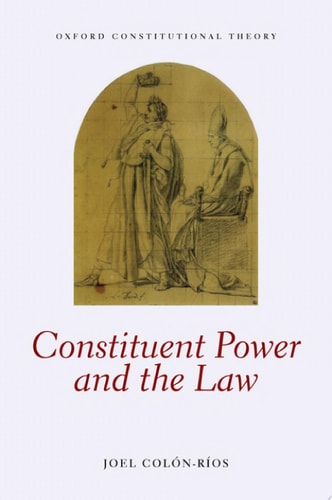
Constituent Power and the Law
0
0
As an Amazon Associate and affiliate partner, Menrva Books earns from qualifying purchases. Learn more
Author Description
Constituent Power Is The Power To Create New Constitutions. Frequently Exercised During Political Revolutions, It Has Been Historically Associated With Extra-legality And Violations Of The Established Legal Order. This Book Examines The Relationship Between Constituent Power And The Law. It Considers The Place Of Constituent Power In Constitutional History, Focusing On The Legal And Institutional Implications That Theorists, Politicians, And Judges Have Derived From It. Commentators And Citizens Have Relied On The Concept Of Constituent Power To Defend The Idea That Electors Have The Right To Instruct Representatives, To Negate The Doctrine Of Parliamentary Sovereignty, And To Argue That The Creation Of New Constitutions Must Take Place Through Extra-legislative Processes, Including Primary Assemblies Open To All Citizens. More Recently, Several Latin American Constitutions Explicitly Incorporate The Theory Of Constituent Power And Allow Citizens, Acting Through Popular Initiative, To Trigger Constitution-making Episodes That May Result In The Replacement Of The Entire Constitutional Order. Constitutional Courts Have Also At Times Employed Constituent Power To Justify Their Jurisdiction To Invalidate Constitutional Amendments That Alter The Fundamental Structure Of The Constitution And Thus Amount To A Constitution-making Exercise. Some Governments Have Used It To Defend The Legality Of Attempts To Transform The Constitutional Order Through Procedures Not Contemplated In The Constitution's Amendment Rule, But Considered Participatory Enough To Be Equivalent To 'the People In Action', Sometimes Sanctioned By Courts. Building On These Findings, Constituent Power And The Law Argues That Constituent Power, Unlike Sovereignty, Should Be Understood As Ultimately Based On A Legal Mandate To Produce A Particular Type Of Juridical Content. In Practice, This Makes It Possible For A Constitution-making Body To Be Understood As Legally Subject To Popularly Ratified Substantive
Menrva's Summary
THE THESIS
This book investigates whether constituent power can be reconciled with the established legal order rather than being viewed solely as an extra-legal force. Joel I. Colon-Rios, a scholar of constitutional law, utilizes historical analysis and comparative legal study to argue that constituent power should be understood as a concept rooted in a legal mandate. He challenges the traditional dichotomy between revolutionary extra-legality and formal constitutional amendment processes by examining how modern legal systems incorporate popular participation.
THE SCOPE MAP
What You Will Find
- Historical analysis of the evolution of constituent power in constitutional theory.
- Examination of Latin American constitutional frameworks that integrate popular initiative.
- Case studies on how constitutional courts interpret the limits of amendment powers.
Scope Limits
- The text does not provide a comprehensive global survey of every national constitution.
- It does not offer a practical manual for drafting specific constitutional clauses.
THE AUTHORITY PERSPECTIVE
Legal scholars and political theorists recognize this work as a significant contribution to the study of constitutional legitimacy and democratic theory. Readers frequently note the academic density of the prose, which is intended for an audience familiar with constitutional law and political philosophy.
Page Count:
368
Publication Date:
2020-01-01
Publisher:
Oxford University Press
ISBN-10:
0191089087
ISBN-13:
9780191089084
Constitutional Law
Law
Legal History
American Politics
Political Theory
Community Tags
Other Editions(2)
Similar Books


Reader Comments
Share Your Thoughts
No comments yet. Be the first to share your thoughts!