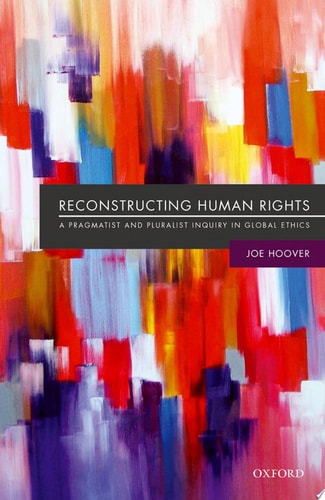
Reconstructing Human Rights
0
0
As an Amazon Associate and affiliate partner, Menrva Books earns from qualifying purchases. Learn more
Author Description
We live in a human-rights world. The language of human-rights claims and numerous human-rights institutions shape almost all aspects of our political lives, yet we struggle to know how to judge this development. Scholars give us good reason to be both supportive and sceptical of the universal claims that human rights enable, alternatively suggesting that they are pillars of cross-cultural understanding of justice or the ideological justification of a violent and exclusionary global order. All too often, however, our evaluations of our human-rights world are not based on sustained consideration of their complex, ambiguous and often contradictory consequences. Reconstructing Human Rights argues that human rights are only as good as the ends they help us realise. We must attend to what ethical principles actually do in the world to know their value. So, for human rights we need to consider how the identity of humanity and the concept of rights shape our thinking, structure our political activity and contribute to social change. Reconstructing Human Rights defends human rights as a tool that should enable us to challenge political authority and established constellations of political membership by making new claims possible. Human rights mobilise the identity of humanity to make demands upon the terms of legitimate authority and challenges established political memberships. In this work, it is argued that this tool should be guided by a democratising ethos in pursuit of that enables claims for more democratic forms of politics and more inclusive political communities. While this work directly engages with debates about human rights in philosophy and political theory, in connecting our evaluations of the value of human rights to their worldly consequences, it will also be of interest to scholars considering human rights across disciplines, including law, sociology, and anthropology.
Menrva's Summary
THE THESIS
This book investigates how the value of human rights should be measured by their practical consequences rather than abstract universal claims. Joe Hoover, a scholar in political theory, argues that human rights function as a tool for political mobilization. By examining how the concepts of humanity and rights shape political activity, the author proposes a framework centered on a democratizing ethos to challenge established authority and foster inclusive political communities.
THE SCOPE MAP
What You Will Find
- A critical analysis of human rights as a mechanism for social and political change.
- A framework for evaluating ethical principles based on their real-world outcomes.
- Theoretical discussions on the intersection of human rights, political authority, and identity.
Scope Limits
- The text focuses primarily on philosophical and political theory rather than providing a comprehensive legal history of specific human rights treaties.
THE AUTHORITY PERSPECTIVE
Scholars in political theory and sociology recognize this work as a significant contribution to the debate surrounding the efficacy and moral standing of human rights institutions. Readers frequently note the academic density of the prose, which is intended for those already engaged in interdisciplinary discussions regarding global justice and political legitimacy.
Page Count:
240
Publication Date:
2016-01-01
Publisher:
Oxford University Press
ISBN-10:
0191085553
ISBN-13:
9780191085550
Philosophy
Human rights
Sociology
Political Theory
Law
Community Tags
Similar Books