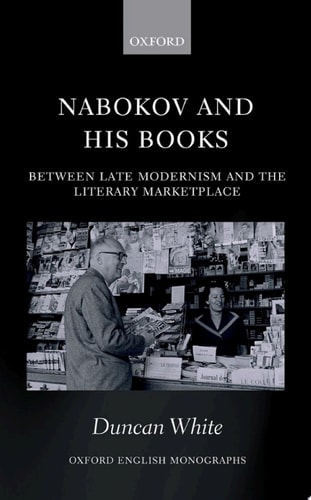
Nabokov and his Books: Between Late Modernism and the Literary Marketplace
0
0
As an Amazon Associate and affiliate partner, Menrva Books earns from qualifying purchases. Learn more
Author Description
At the outbreak of the Second World War Vladimir Nabokov stood on the brink of losing everything all over again. The reputation he had built as the pre-eminent Russian novelist in exile was imperilled. In Nabokov and his Books, Duncan White shows how Nabokov went to America and not only reinvented himself as an American writer but also used the success of Lolita to rescue those Russian books that had been threatened by obscurity. Using previously unpublished and neglected material, White tells the story of Nabokov the professional writer and how he sought to balance his late modernist aesthetics with the demands of a booming American literary marketplace. As Nabokov's reputation grew so he took greater and greater control of how his books were produced, making the material form of the book—including forewords, blurbs, covers—part of the novel. In his later novels, including Pale Fire, Ada, and Transparent Things, the idea of the novelist losing control of his work became the subject of the novels themselves. These plots were replicated in Nabokov's own biography, as he discovered his inability to control the forces the market success of Lolita had unleashed. With new insights into Nabokov's life and work, this book reconceptualises the way we think about one of the most important and influential novelists of the twentieth century.
Menrva's Summary
THE THESIS
This book investigates how Vladimir Nabokov navigated the tension between his late modernist aesthetic principles and the commercial pressures of the mid-twentieth-century American literary marketplace. Duncan White, a scholar of twentieth-century literature, utilizes previously unpublished archival material and correspondence to trace Nabokov's transition from an exiled Russian novelist to a prominent American author. The work argues that Nabokov actively managed the material production of his books—including paratexts like blurbs and covers—to maintain artistic control even as his commercial success grew.
THE SCOPE MAP
What You Will Find
- Analysis of Nabokov's professional correspondence and publishing contracts
- Examination of the role of paratexts in Nabokov's later novels
- Case studies of works including Lolita, Pale Fire, Ada, and Transparent Things
- Historical context regarding the American literary market post-World War II
Scope Limits
- Does not provide a comprehensive biography of Nabokov's entire life
- Focuses primarily on the professional and material aspects of his career rather than purely thematic literary analysis
THE AUTHORITY PERSPECTIVE
Scholars and critics recognize this work as a significant contribution to Nabokov studies, particularly for its focus on the intersection of authorship and the publishing industry. Readers frequently note the academic density of the prose, which is well-suited for researchers and students of literary history.
Page Count:
248
Publication Date:
2017-01-01
Publisher:
OUP Oxford
ISBN-10:
0191081884
ISBN-13:
9780191081880
Biography
Literary History
Literary Criticism
English
English & College Success
Modernism
Publishing History
Community Tags
Similar Books