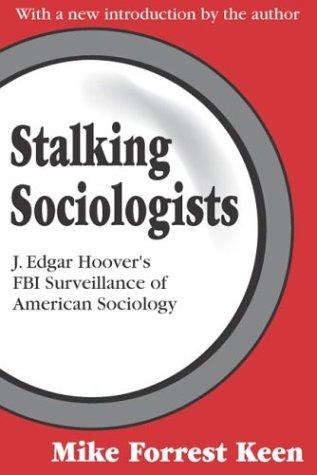
Stalking Sociologists
0
0
As an Amazon Associate and affiliate partner, Menrva Books earns from qualifying purchases. Learn more
Author Description
This history uses documents obtained through the Freedom of Information Act. Keen argues that Hoover and the FBI marginalized sociologists such as W.E.B. Du Bois and C. Wright Mills tried to suppress the development of a Marxist tradition in American sociology, and likely pushed the mainstream of the discipline away from a critique of American society and towards a more quantitative and scientific direction. He documents thousands of man-hours and millions of dollars dedicated to this project. Faculty members of various departments of sociology were recruited to inform on the activities of their colleagues and the American Sociological Association was a target of FBI surveillance, Keen turns sociology back upon the FBI, using the writings and ideas of the very sociologists Hoover investigated to examine and explain the excesses of the Bureau and its boss. The result is a significant contribution to the collective memory of American society as well as the accurate history of the sociological discipline.--Jacket.
Menrva's Summary
THE THESIS
This book investigates the FBI's systematic surveillance and suppression of American sociologists, particularly those with Marxist leanings, during the mid-20th century. Mike Forrest Keen argues that J. Edgar Hoover and the FBI actively worked to marginalize key figures like W.E.B. Du Bois and C. Wright Mills, aiming to stifle critical analysis of American society. The book details extensive FBI operations, including the recruitment of informants within sociology departments and the surveillance of professional organizations, which Keen contends redirected the discipline towards more quantitative and less critical approaches. By employing the theoretical frameworks of the targeted sociologists, Keen turns the lens of sociology back onto the FBI itself to expose its overreach and the motivations of its director.
THE SCOPE MAP
- Analysis of FBI documents obtained through the Freedom of Information Act.
- Examination of the FBI's efforts to suppress Marxist sociology in America.
- Focus on the roles of W.E.B. Du Bois and C. Wright Mills as targets.
- Documentation of FBI surveillance of sociology faculty and the American Sociological Association.
- Argument that FBI actions pushed sociology towards quantitative methods and away from social critique.
- Discussion of the financial and human resources dedicated to this FBI project.
- Application of sociological theory to analyze the FBI and its leadership.
THE AUTHORITY PERSPECTIVE
This work is presented as a significant contribution to understanding both American society and the history of the sociological discipline. The jacket copy suggests it offers an accurate historical account of the FBI's actions and their impact on academic inquiry. By utilizing the very ideas of the sociologists investigated, the book aims to provide a unique analytical perspective on the Bureau's excesses. The research is framed as a vital part of collective memory, highlighting the intersection of political power and academic freedom.
Page Count:
254
Publication Date:
2003-01-01
ISBN-10:
0765805634
ISBN-13:
9780765805638
History
Non-Fiction
American Studies
Sociology
Community Tags
Similar Books