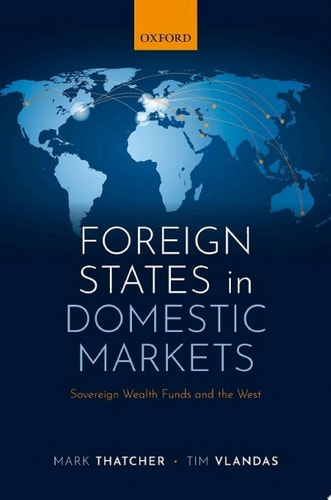
Foreign States in Domestic Markets: Sovereign Wealth Funds and the West
0
0
As an Amazon Associate and affiliate partner, Menrva Books earns from qualifying purchases. Learn more
Author Description
Political economy debates have focused on the internationalisation of private capital, but foreign states increasingly enter domestic markets as financial investors. How do policy makers in recipient countries react? Do they treat purchases as a threat and impose restrictions or see them as beneficial and welcome them? What are the wider implications for debates about state capacities to govern domestic economies in the face of internationalisation of financial markets? In response, Foreign States in Domestic Markets have developed the concept of 'internationalised statism', where governments welcome the use of foreign state investments to govern their domestic economies. These foreign state investments are applied to the most prominent overseas state investors, Sovereign Wealth Funds (SWFs). Many SWFs are from Asia and the Middle East and their number and size have greatly expanded, reaching $9 trillion by 2020. This book examines policies towards non-Western SWFs buying company shares in four countries: the US, UK, France, and Germany. Although the US has imposed significant legal restrictions, the others have pursued internationalised statism in ways that are surprising given both popular and political economy classifications. This book argues that the policy patterns found are related to domestic politics, notably the preferences and capacities of the political executive and legislature, rather than solely economic needs or national security risks. The phenomenon of internationalised statism underlines that overseas state investment provides policy makers in recipient states with new allies and resources. The study of SWFs shows that internationalisation and liberalisation of financial markets offer national policy makers opportunities to govern their domestic economies.
Menrva's Summary
THE THESIS
This book investigates how recipient countries respond to the increasing presence of foreign Sovereign Wealth Funds (SWFs) in their domestic markets and whether these investments are viewed as threats or assets. Mark R. Thatcher and Tim Vlandas utilize a comparative political economy framework to analyze the policies of the US, UK, France, and Germany. They argue that the reception of these funds is driven primarily by domestic political preferences and the capacities of national legislatures and executives, rather than purely by economic necessity or national security concerns. The authors introduce the concept of 'internationalised statism' to describe how governments leverage foreign state capital to manage their own domestic economic agendas.
THE SCOPE MAP
What You Will Find
- Comparative analysis of policy responses to SWFs in the US, UK, France, and Germany.
- The theoretical framework of 'internationalised statism'.
- Examination of the growth of SWFs from Asia and the Middle East up to 2020.
Scope Limits
- The analysis is restricted to four specific Western nations and does not cover the global impact of SWFs in developing economies.
- The study focuses on equity investments in company shares rather than other forms of foreign direct investment.
THE AUTHORITY PERSPECTIVE
Experts in political economy recognize this work as a significant contribution to understanding the intersection of state power and global financial flows. Readers frequently note the academic density of the prose and the authors' rigorous application of comparative institutional analysis to contemporary financial policy.
Page Count:
191
Publication Date:
2021-01-01
Publisher:
OUP Oxford
ISBN-10:
0191089273
ISBN-13:
9780191089275
Economics
Public Policy
Finance
International relations
Community Tags
Similar Books