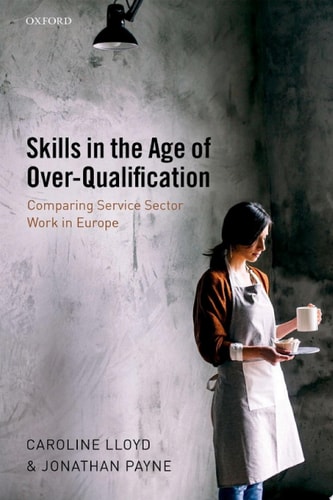
Skills in the Age of Over-Qualification: Comparing Service Sector Work in Europe
0
0
As an Amazon Associate and affiliate partner, Menrva Books earns from qualifying purchases. Learn more
Author Description
Across the developed world, most of us who work now earn our living in the service sector. However, the issue of what kind of service economy is sustainable and desirable, both in economic and social terms, is rarely debated. This book argues that this needs to change. National governments have emphasised the role of skills in achieving international competitiveness, higher living standards, and social inclusion. However, even prior to the 2008 financial crisis, problems of over-qualification, skills wastage, and poor job quality were becoming difficult to ignore. This raises important questions about what kind of service sector jobs will be on offer to meet the aspirations of an increasingly qualified workforce and what role can governments play in raising the skills required in jobs and the quality of jobs and services? Work organisation and job design are key factors shaping the skill content of work and the opportunities workers have to deploy their skills and capabilities. Through cross-national comparative research, this book examines whether and why service sector jobs vary across countries. Drawing upon detailed empirical research, the jobs of vocational teacher, fitness instructor, and café worker in the UK, Norway, and France are compared, allowing an exploration of the role of national institutions, sectors, and organisations in shaping work organisation and job quality. The findings contribute to the comparative study of work organisation, the relationship between skills and performance, the role and purpose of education and the prospects for better jobs in 'the age of over-qualification'.
Menrva's Summary
THE THESIS
This book investigates the sustainability and quality of service sector employment in the context of rising over-qualification and the limitations of current national skills-based economic policies. Authors Caroline Lloyd and Jonathan Payne, both experts in employment relations and work organization, utilize cross-national comparative data to challenge the assumption that increasing worker qualifications automatically leads to higher job quality or economic performance. They argue that work organization and job design are the primary determinants of how skills are utilized, necessitating a shift in how governments and organizations approach the service economy.
THE SCOPE MAP
What You Will Find
- Comparative analysis of service sector employment across the UK, Norway, and France.
- Empirical case studies focusing on three specific roles: vocational teacher, fitness instructor, and café worker.
- An examination of how national institutions and organizational structures influence job design.
Scope Limits
- The analysis is restricted to the service sector and does not address manufacturing or industrial labor markets.
- The study focuses on specific European nations and does not provide a global overview of service work.
THE AUTHORITY PERSPECTIVE
Experts in labor sociology and economics recognize this work as a significant contribution to the comparative study of work organization and the limitations of human capital theory. Readers frequently note the academic density of the prose and the rigorous empirical methodology employed to contrast national institutional frameworks.
Page Count:
275
Publication Date:
2016-01-01
Publisher:
OUP Oxford
ISBN-10:
0191093300
ISBN-13:
9780191093302
Economics
Service Sector
Public Policy
Principles of Management
Sociology
Labor Studies
Workplace Studies
Community Tags
Similar Books