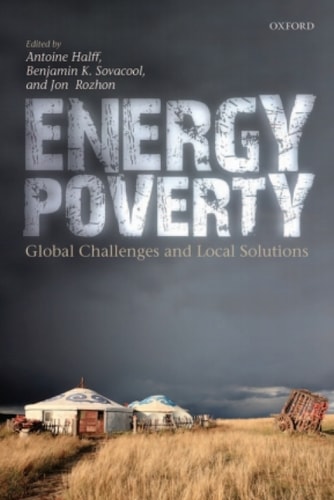
Energy Poverty: Global Challenges and Local Solutions
0
0
As an Amazon Associate and affiliate partner, Menrva Books earns from qualifying purchases. Learn more
Author Description
This edited volume looks at energy poverty, an issue whose pivotal role in the fight for human development is only now being recognised by policymakers. Nearly one quarter of humanity still lacks access to electricity. Close to one third rely on traditional fuels like firewood and cow dung for cooking, at great cost to their health and welfare. While most prevalent in parts of Africa and Asia, energy poverty is a global problem which concerns us all. This book, which brings together economists, policymakers, entrepreneurs, and other practitioners from all over the world, is dedicated to a single goal: finding a solution to this haunting problem. It is part history, part economics, part political analysis, part business case review, and part field handbook. Part One focuses on defining and measuring the problem and benchmarking progress in solving it, an obvious prerequisite to any successful energy-access policy. Part Two reviews past and current energy access programs, with an eye towards finding out what worked and what didn't and what can be replicated elsewhere. These case reviews are told as seen on the ground - China's experience by top Chinese officials and Africa's by African regulators and scholars. Based in part on those cases, the book's last, more forward-looking section aims to present practitioners with a tool kit, a menu of options to speed up their efforts. The energy access agenda is gaining traction at a time of rising concerns about climate change and resource constraints. This book shows that bringing modern energy to those who lack it not just a moral imperative, but will likely benefit the world as a whole without harming the environment or unduly stretching finite resources.
Menrva's Summary
THE THESIS
This volume investigates the global crisis of energy poverty, examining how the lack of access to modern electricity and clean cooking fuels hinders human development and economic progress. The authors, including Antoine Halff, Jon Rozhon, and Benjamin K. Sovacool, curate a multidisciplinary collection of essays from economists, policymakers, and entrepreneurs. The text argues that addressing energy access is a moral and economic imperative that can be achieved without compromising environmental sustainability or exhausting finite resources.
THE SCOPE MAP
What You Will Find
- Quantitative frameworks for defining and measuring energy poverty
- Comparative analysis of energy access programs in Africa and Asia
- Case studies authored by regional regulators and officials
- A practical toolkit of policy options for practitioners
Scope Limits
- Does not provide a singular, universal solution for all geographic contexts
- Focuses primarily on policy and economic implementation rather than technical engineering specifications
THE AUTHORITY PERSPECTIVE
Experts recognize this volume as a comprehensive resource for understanding the intersection of energy access and international development. Readers frequently note the practical utility of the case studies for policymakers seeking to replicate successful energy initiatives in diverse regions.
Page Count:
472
Publication Date:
2014-01-01
Publisher:
OUP Oxford
ISBN-10:
0191504904
ISBN-13:
9780191504907
Energy policy
Energy
Sustainability
Earth Sciences
Public Policy
Community Tags
Similar Books