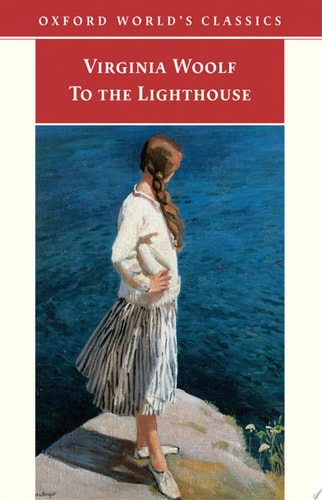
To The Lighthouse
0
0
As an Amazon Associate and affiliate partner, Menrva Books earns from qualifying purchases. Learn more
Author Description
'i Am Making Up To The Lighthouse - The Sea Is To Be Heard All Through It' Inspired By The Lost Bliss Of Her Childhood Summers In Cornwall, Virginia Woolf Produced One Of The Masterworks Of English Literature In To The Lighthouse. It Concerns The Ramsay Family And Their Summer Guests On The Isle Of Skye Before And After The First World War. As Children Play And Adults Paint, Talk, Muse And Explore, Relationships Shift And Mutate. A Captivating Fusion Of Elegy, Autobiography, Socio-political Critique And Visionary Thrust, It Is The Most Accomplished Of All Woolf's Novels. On Completing It, She Thought She Had Exorcised The Ghosts Of Her Imposing Parents, But She Had Also Brought Form To A Book Every Bit As Vivid And Intense As The Work Of Lily Briscoe, The Indomitable Artist At The Centre Of The Novel. About The Series: For Over 100 Years Oxford World's Classics Has Made Available The Widest Range Of Literature From Around The Globe. Each Affordable Volume Reflects Oxford's Commitment To Scholarship, Providing The Most Accurate Text Plus A Wealth Of Other Valuable Features, Including Expert Introductions By Leading Authorities, Helpful Notes To Clarify The Text, Up-to-date Bibliographies For Further Study, And Much More.
Menrva's Summary
THE PULSE
The Ramsay family and their guests navigate the shifting tides of interpersonal relationships and the passage of time during two summer visits to the Isle of Skye. Virginia Woolf centers the narrative on the Ramsay family, exploring the internal lives of characters as they interact, paint, and contemplate existence. The story is structured around the physical and logical constraints of the Ramsay household, moving from the pre-war period to the post-war aftermath. The narrative framework utilizes a stream-of-consciousness style, prioritizing the subjective experience of time and memory over traditional linear plot progression.
INSIDE THE PAGES
- Stream-of-consciousness narrative technique
- Non-linear temporal structure
- Focus on internal monologue and psychological depth
- Exploration of the passage of time and mortality
- Symbolism of the lighthouse and the sea
- Contrast between domestic life and artistic creation
- Minimalist plot progression
- Multi-perspective character studies
THE COLLECTIVE ECHO
Readers and critics frequently highlight the novel's experimental structure and its departure from traditional narrative conventions. Discussion often centers on the effectiveness of Woolf's stream-of-consciousness technique in capturing the fluidity of human thought and memory. Many observers note the balance between the domestic setting and the profound philosophical questions regarding art and existence. The atmosphere is often described as elegiac and introspective, requiring readers to engage deeply with the internal states of the characters. The work is widely recognized for its ability to transform mundane daily interactions into a complex meditation on the nature of reality.
Page Count:
272
Publication Date:
2006-01-01
Publisher:
Oup Oxford
ISBN-10:
0191501131
ISBN-13:
9780191501135
Literary Fiction
Psychological
classic
Modern fiction
Philosophical
English fiction
Modernist
Fiction
Community Tags
Other Editions(21)

Independently published
2024
Default edition
Independently published
2023

Independently published
2023

Dreamscape Media
2023

Independently published
2023

Independently Published
2022

Independently Published
2022

Independently Published
2022

Independently Published
2022

Independently Published
2022

Independently Published
2022

Independently Published
2022

Independently Published
2022

Independently Published
2022
e-artnow ebooks
2013
Naxos AudioBooks
2008
Naxos
2006
Oup Oxford
2006

Cbc Radio Canada
2002
Chivers Audio Books
2001
Penguin
1964
Similar Books









Reader Comments
Share Your Thoughts
No comments yet. Be the first to share your thoughts!