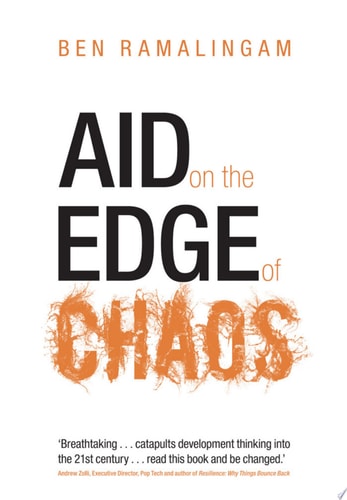
Aid on the Edge of Chaos
0
0
As an Amazon Associate and affiliate partner, Menrva Books earns from qualifying purchases. Learn more
Author Description
It is widely recognised that the foreign aid system—which today involves every country in the world—is in need of drastic change. But there are conflicting opinions as to what is needed. Some call for dramatic increases in resources, to meet long-overdue commitments, and to scale up what is already being done around the world. Others point to the flaws in aid, and bang the drum for cutting it altogether—and argue that the fate of poor and vulnerable people be best placed in the hands of markets and the private sector. Meanwhile, growing numbers are suggesting that what is most needed is the creative, innovative transformation of how aid works. Aid on the Edge of Chaos is firmly in the third of these camps. In this book, Ben Ramalingam shows that the linear, mechanistic models and assumptions on which foreign aid is built would be more at home in early-20th-century factory floors than in the dynamic, complex world we face today. All around us, we can see the costs and limitations of dealing economies and societies as if they are analogous to machines. The reality is that such social systems have far more in common with ecosystems: They are complex, dynamic, diverse, and unpredictable. Many thinkers and practitioners in science, economics, business, and public policy have started to embrace more "ecologically literate" approaches to guide both thinking and action, informed by ideas from the "new science" of complex adaptive systems. Inspired by these efforts, there is an emerging network of aid practitioners, researchers, and policy makers who are experimenting with complexity-informed responses to development and humanitarian challenges. This book showcases the insights, experiences, and often remarkable results from these efforts. From transforming approaches to child malnutrition, to rethinking processes of economic growth, from building peace to combating desertification, from rural Vietnam to urban Kenya, Aid on the Edge of Chaos provides a comprehensive look at how we can better understand and respond to the challenges of our time.
Menrva's Summary
THE THESIS
This book investigates whether the foreign aid system can be transformed by shifting from linear, mechanistic models to approaches based on the science of complex adaptive systems. Ben Ramalingam, a researcher and practitioner in international development, argues that current aid structures are outdated and ill-suited for the dynamic, unpredictable nature of modern social and economic systems. By drawing on insights from ecology, economics, and organizational theory, he proposes that aid effectiveness depends on embracing complexity rather than attempting to control outcomes through rigid, factory-style management.
THE SCOPE MAP
What You Will Find
- Applications of complex adaptive systems theory to humanitarian and development challenges
- Case studies ranging from child malnutrition programs to economic growth initiatives
- Comparative analysis of traditional aid models versus complexity-informed responses
- Examples of cross-disciplinary learning from business, science, and public policy
Scope Limits
- Does not provide a singular, universal blueprint for aid reform
- Does not focus on the political history of specific donor nations
THE AUTHORITY PERSPECTIVE
Experts and practitioners in the development sector frequently cite this work as a primary text for understanding the shift toward systems thinking in humanitarian aid. Readers often note the academic rigor of the prose, which balances theoretical complexity with practical, real-world applications.
Page Count:
480
Publication Date:
2013-01-01
Publisher:
Oup Oxford
ISBN-10:
0191503436
ISBN-13:
9780191503436
Economics
Public Policy
Systems Thinking
Complexity Theory
International Development
Community Tags
Other Editions(2)

Similar Books

Reader Comments
Share Your Thoughts
No comments yet. Be the first to share your thoughts!