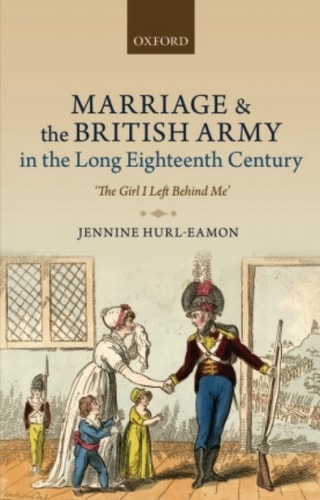
Marriage and the British Army in the Long Eighteenth Century: 'The Girl I Left Behind Me'
0
0
As an Amazon Associate and affiliate partner, Menrva Books earns from qualifying purchases. Learn more
Author Description
The Girl I Left Behind Me addresses a neglected aspect of the history of the Hanoverian army. From 1685 to the beginning of the Victorian era, army administration attempted to discourage marriage among men in almost all ranks. It fostered a misogynist culture of the bachelor soldier who trifled with feminine hearts and avoided responsibility and commitment. The army's policy was unsuccessful in preventing military marriage. By concentrating on the many soldiers' wives who were unable to win permission to live "on the strength" of the regiment (entitled to half-rations) and travel with their husbands, this title explores the phenomenon of soldiers who persisted in defying the army's anti-marriage initiatives. Using evidence gathered from ballads, novels, court and parish records, letters, memoirs, and War Office papers, Jennine Hurl-Eamon shows that both soldiers and their wives exerted continual pressure on the state through evocative appeals to officers and civilians, fuelled by wives' pride in performing their own military "duty" at home. Respectable, companionate couples of all ranks reflect a subculture within the army that recognized the value in Enlightenment femininity. Looking at military marriages within the telescoping contexts of the state, their regimental and civilian communities, and the couples themselves, The Girl I Left Behind Me reveals the range of masculinities beneath the uniform, the positive influence of wives and sweethearts on soldiers' performance of their duties, and the surprising resilience of partnerships severed by war and army anti-marriage policies.
Menrva's Summary
THE THESIS
This work investigates the persistent tension between the British Army's anti-marriage policies and the reality of soldiers' domestic lives during the long eighteenth century. Jennine Hurl-Eamon, a specialist in military social history, examines how soldiers and their wives navigated institutional hostility to maintain relationships. By analyzing a diverse array of primary sources, the author argues that these marriages were not merely anomalies but a resilient subculture that challenged the prevailing military ideal of the bachelor soldier.
THE SCOPE MAP
What You Will Find
- Analysis of military administration policies from 1685 to the early Victorian era.
- Examination of the 'on the strength' status and its impact on rations and travel.
- Integration of cultural artifacts including ballads, novels, and personal memoirs.
- Evaluation of legal and administrative documentation such as court and parish records.
Scope Limits
- The study focuses primarily on the British Hanoverian army and does not extend to other European military structures.
- It does not provide a comprehensive biography of specific military figures, focusing instead on the collective experience of rank-and-file soldiers and their families.
THE AUTHORITY PERSPECTIVE
Historians recognize this text as a significant contribution to the social history of the British military, particularly for its focus on the agency of soldiers' wives. Scholars frequently cite the book for its meticulous use of varied archival sources to reconstruct the domestic lives of military families.
Page Count:
256
Publication Date:
2014-01-01
Publisher:
OUP Oxford
ISBN-10:
0191502766
ISBN-13:
9780191502767
History
Military History
Army Spouses
Gender Studies
Great Britain
18th century
British History
Social History
European History
Community Tags
Other Editions(2)

Similar Books