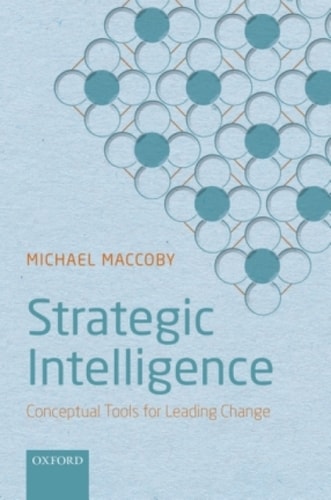
Strategic Intelligence: Conceptual Tools for Leading Change
0
0
As an Amazon Associate and affiliate partner, Menrva Books earns from qualifying purchases. Learn more
Author Description
Changes in technology, customer demands, competition, and the social character challenge organizations to innovate and change. How they change depends on their leaders, and their knowledge, and philosophy. To create a better future for organizations and to improve the wellbeing of customers, collaborators and communities, leaders need to be strategic thinkers. This book describes the qualities of strategic intelligence and provides the conceptual tools that equip leaders to improve and transform organizations in the age of knowledge work. These qualities include foresight, visioning, partnering both within and outside the organization, and engaging and motivating collaborators. To develop these qualities, it is necessary to articulate a leadership philosophy and to gain knowledge of systems, variation, personality psychology, and the theory of knowledge. This book uniquely integrates leadership, personality and organization. Michael Maccoby has almost unparalleled experience of working with organizations in a wide variety of contexts. He draws his insights from several disciplines - organization theory, psychoanalysis, anthropology; and from working with distinguished and pioneer thinkers. These include the psychoanalyst Erich Fromm; the systems theorist Russell Ackoff; and management pioneer W. Edwards Deming. A major challenge for leadership today is the transformation of traditional bureaucracies into learning organizations. It can't be done by following formulas or roadmaps. Leaders need the qualities and conceptual tools of strategic intelligence and this book shows them what they must do and provides exercises to develop them.
Menrva's Summary
THE THESIS
How can leaders effectively transform traditional bureaucracies into adaptive, knowledge-based organizations in an era of rapid technological and social change? Michael Maccoby, an experienced consultant and organizational theorist, argues that successful leadership requires the cultivation of 'strategic intelligence.' He synthesizes insights from psychoanalysis, systems theory, and anthropology to provide a framework for leaders to develop foresight, vision, and the ability to foster collaborative environments. The book posits that transformation cannot be achieved through rigid formulas, but rather through a deep understanding of personality, systems, and the theory of knowledge.
THE SCOPE MAP
What You Will Find
- A conceptual framework for strategic intelligence including foresight, visioning, and partnering.
- Integration of management theories from Russell Ackoff and W. Edwards Deming with psychoanalytic perspectives.
- Practical exercises designed to help leaders articulate their own leadership philosophy.
- Analysis of the shift from traditional bureaucratic structures to learning organizations.
Scope Limits
- The text does not provide universal, one-size-fits-all roadmaps or step-by-step corporate implementation manuals.
- It focuses primarily on the psychological and systemic qualities of the leader rather than specific financial or technical operational metrics.
THE AUTHORITY PERSPECTIVE
Experts recognize this work as a sophisticated synthesis of behavioral psychology and systems management, noting its departure from standard, formulaic business literature. Readers frequently highlight the academic density of the prose, which requires a commitment to reflecting on the underlying theories of personality and organizational structure.
Page Count:
208
Publication Date:
2015-01-01
Publisher:
OUP Oxford
ISBN-10:
0191504920
ISBN-13:
9780191504921
Business
Organizational change
Management
Leadership
Professional Development
Strategic Planning
Community Tags
Similar Books