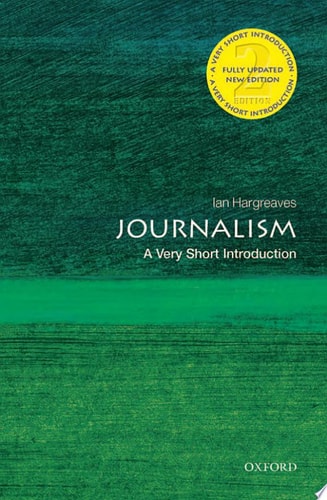
Journalism: A Very Short Introduction
0
0
As an Amazon Associate and affiliate partner, Menrva Books earns from qualifying purchases. Learn more
Author Description
Journalism Entered The Twenty-first Century Caught In A Paradox. The World Had More Journalism, Across A Wider Range Of Media, Than At Any Time Since The Birth Of The Western Free Press In The Eighteenth Century. Western Journalists Had Found Themselves Under A Cloud Of Suspicion: From Politicians, Philosophers, The General Public, Anti-globalization Radicals, Religious Groups, And Even From Fellow Journalists. Critics Argued That The News Industry Had Lost Its Moral Bearings, Focusing On High Investment Returns Rather Than Reporting And Analysing The Political, Economic, And Social Issues Of The Day. Journalism Has A Central And Profound Impact On Our Worldview; We Find It Everywhere From Newspapers And Television, To Radio And The Internet. In The New Edition Of This Thought-provoking And Provocative Very Short Introduction, Ian Hargreaves Examines The World Of Contemporary Journalism. By Looking Not Only At What Journalism Has Been In The Past, But Also What It Is Becoming In The Digital Age, He Examines The Big Issues Relating To Reportage, Warfare, Celebrity Culture, Privacy, And Technology Worldwide. About The Series: The Very Short Introductions Series From Oxford University Press Contains Hundreds Of Titles In Almost Every Subject Area. These Pocket-sized Books Are The Perfect Way To Get Ahead In A New Subject Quickly. Our Expert Authors Combine Facts, Analysis, Perspective, New Ideas, And Enthusiasm To Make Interesting And Challenging Topics Highly Readable.
Menrva's Summary
THE THESIS
How does the practice of journalism maintain its societal relevance and ethical integrity amidst the rapid technological and economic shifts of the twenty-first century? Ian Hargreaves, a professor of digital economy and former journalist, utilizes his extensive background in media management and policy to investigate the state of modern news. He argues that while the volume of information has increased exponentially, the industry faces a crisis of public trust and moral direction. The text provides a framework for understanding how economic pressures and digital transformation influence the quality and objectivity of contemporary reportage.
THE SCOPE MAP
What You Will Find
- Historical evolution of the Western free press from the eighteenth century to the present.
- Analysis of the impact of digital technology and the internet on news dissemination.
- Examination of ethical dilemmas involving celebrity culture, privacy, and political reporting.
- Discussion on the role of journalism in shaping global worldviews during wartime.
Scope Limits
- Does not provide a comprehensive technical manual for newsroom operations or investigative techniques.
- Focuses primarily on Western journalistic traditions rather than a global comparative analysis of all media systems.
THE AUTHORITY PERSPECTIVE
Critics and academics frequently cite this work as a concise, high-level overview suitable for students and those seeking a foundational understanding of media ethics. Readers often note the prose is accessible yet intellectually rigorous, effectively balancing historical context with current industry challenges.
Page Count:
176
Publication Date:
2014-01-01
Publisher:
Oup Oxford
ISBN-10:
0191510513
ISBN-13:
9780191510519
Non-Fiction
Communication
Journalism
Reference
Media Studies
Community Tags
Other Editions(5)

Similar Books



Reader Comments
Share Your Thoughts
No comments yet. Be the first to share your thoughts!