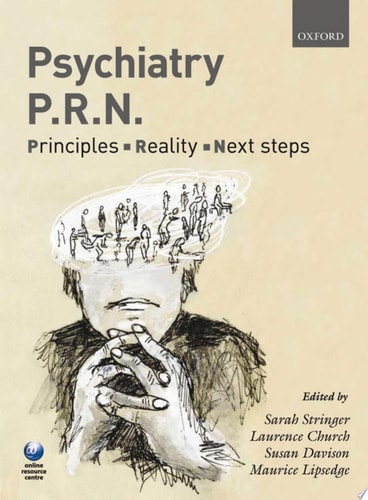
Psychiatry PRN: Principles, Reality, Next Steps
0
0
As an Amazon Associate and affiliate partner, Menrva Books earns from qualifying purchases. Learn more
Author Description
Psychiatry Prn Contains Core Content For Psychiatry Education, But Gives Prominence To Clinical And Practical Skills, As Well As Exam Preparation. Prn Is A Latin Medical Acronym Meaning Pro Re Nata (as Required). These Letters Also Inform The Structure Of The Book Into The Parts: Principles, Reality And Next Steps. Each Of The Main Chapters Opens With Principles, Which Cover The Key Characteristics Of A Psychiatric Condition. This Is The Typical Ground Of Textbooks, And This Book Covers All The Necessary Ground As Concerns Undergraduate Learning Outcomes, But Is Arguably More Succinct Than Standard Works On The Subject. Nevertheless, Illustrations And The Careful Use Of Pedagogic Features (prominence Given To Key Facts, Tips And Points Of Reflection, As Well As Effective Use Of Tables) Lift Even This Most Standard Area Of Coverage. The Reality Section Is Where This Book Begins To Really Distinguish Itself, With A Practical Articulation Of Clinical Skills For The Novice. This Involves Sample Dialogue Which Might Form Part Of The Psychiatric Interview, Which Bravely, Yet Skilfully Reflects The Reality With Which Patients Present, And The Difficulties Often Encountered By Medical Students. The Content In This Section Includes A General Approach (tips, Tricks And Cautionary Tales), Leading To A Sample Interview, Moving On To Indicative Stations For Objective Structured Clinical Examinations (osces). The Next Steps Section Puts Psychiatry Into The Context Of Early Working Life As A Doctor, And Highlights Where Psychiatric Considerations Overlap With Medical And Surgical Management, As Exemplified By Scenarios Dealing With Capacity To Consent To Treatment. Psychiatry Prn Exists To Enable Students To Engage With Psychiatry. In Addition To The Framework Described Above, The Book Is Rich In Illustrative Content, Be That An Original Impressionistic Picture Of A Condition, Or An Allusion To Contemporary Cultural Representations Of Mental Health And Illness, To Which Students M
Menrva's Summary
THE THESIS
This book investigates how to bridge the gap between theoretical psychiatric knowledge and the practical, real-world demands of clinical practice for medical students. The authors, a team of experienced medical professionals, utilize a structured pedagogical framework to ensure students master both the diagnostic criteria of mental health conditions and the interpersonal skills required for effective patient interaction.
THE SCOPE MAP
What You Will Find
- Core principles of psychiatric conditions aligned with undergraduate learning outcomes
- Practical clinical interview techniques and sample dialogues
- Preparation strategies for Objective Structured Clinical Examinations (OSCEs)
- Guidance on navigating psychiatric considerations in general medical and surgical settings
Scope Limits
- Does not serve as an exhaustive clinical encyclopedia for advanced practitioners
- Does not cover long-term therapeutic modalities or specialized psychiatric sub-disciplines in depth
THE AUTHORITY PERSPECTIVE
Medical educators and students frequently highlight this text for its accessible, modular structure that prioritizes practical application over dense theory. Experts note that the inclusion of OSCE-focused content and realistic dialogue samples makes it a highly functional resource for students transitioning into clinical rotations.
Page Count:
252
Publication Date:
2009-01-01
Publisher:
Oxford University Press
ISBN-10:
019151201X
ISBN-13:
9780191512018
Psychiatry
Education
Case studies
Medical
Mental Illness
Reference
Community Tags
Similar Books














Reader Comments
Share Your Thoughts
No comments yet. Be the first to share your thoughts!