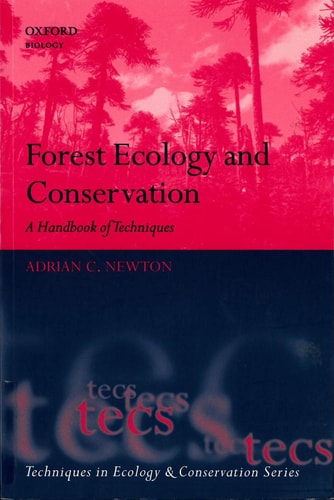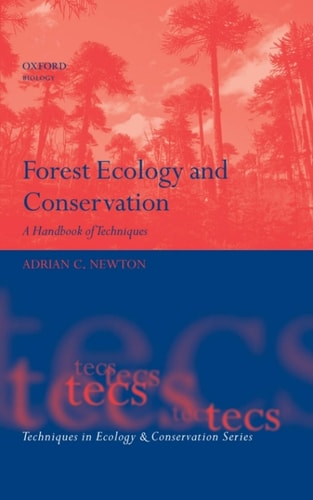
Forest Ecology and Conservation: A Handbook of Techniques
0
0
As an Amazon Associate and affiliate partner, Menrva Books earns from qualifying purchases. Learn more
Author Description
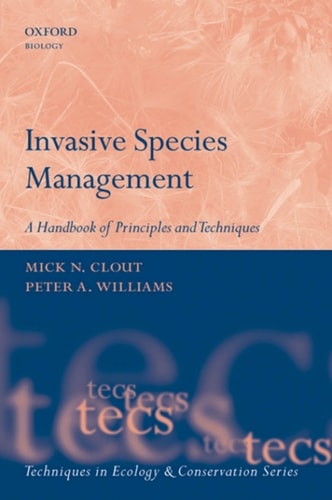
Forest conservation has become one of the most important environmental issues currently facing humanity, as a result of widespread deforestation and forest degradation. Pressures on remaining natural forests continue to intensify, leading to high rates of biodiversity loss. Understanding how human activities influence ecological processes within forests is essential for developing effective conservation action. This book describes research methods and techniques relevant to understanding forest ecology, with a particular focus on those that are relevant to practical conservation and sustainable forest management. This information is currently disparate and difficult to locate and, as with other books in this series, the intention is to provide a comprehensive synthesis for use by graduate students, researchers and practising conservationists. Methods are presented for assessing forest extent and condition, structure and composition, and forest dynamics at a variety of scales. Techniques for assessing genetic variation and reproductive ecology, and for evaluating the habitat value of forests are also described. Particular emphasis is given to state-of-the-art techniques such as remote sensing, GIS, computer modelling and molecular markers. However, traditional methods of forest mensuration and ecological survey are also presented. The methods and techniques described are generally applicable to all forest types, including both temperate and tropical forest ecosystems.
Menrva's Summary
THE THESIS
This handbook investigates the methodological challenges of assessing forest ecosystems to inform effective conservation and sustainable management strategies. Adrian Newton, a specialist in forest ecology and conservation, synthesizes disparate research techniques into a unified framework. The text provides a systematic approach for graduate students and practitioners to evaluate forest health, biodiversity, and ecological dynamics across various global biomes.
THE SCOPE MAP
What You Will Find
- Quantitative methods for assessing forest extent, structure, and composition
- Integration of remote sensing, GIS, and computer modeling in ecological surveys
- Molecular marker applications for genetic variation analysis
- Traditional forest mensuration and reproductive ecology survey techniques
Scope Limits
- Does not provide specific policy recommendations for regional government legislation
- Focuses on technical research methodology rather than socio-economic forest management theory
THE AUTHORITY PERSPECTIVE
Experts identify this work as a comprehensive technical reference for field researchers and conservation practitioners. Readers frequently note the high density of the prose, which serves as a practical manual for applying complex ecological survey methods in diverse forest environments.
Page Count:
480
Publication Date:
2007-01-01
Publisher:
Oxford University Press
ISBN-10:
0191524352
ISBN-13:
9780191524356
Science
Conservation
Reference
Ecology
Forestry