Locating Privacy in Tudor London
0
0
As an Amazon Associate and affiliate partner, Menrva Books earns from qualifying purchases. Learn more
Author Description
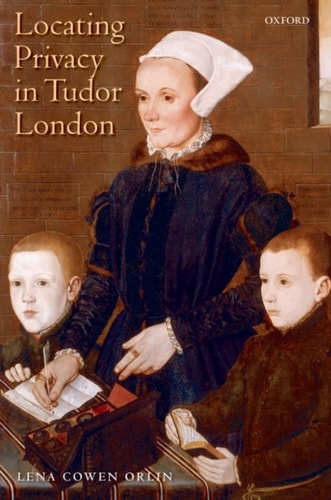
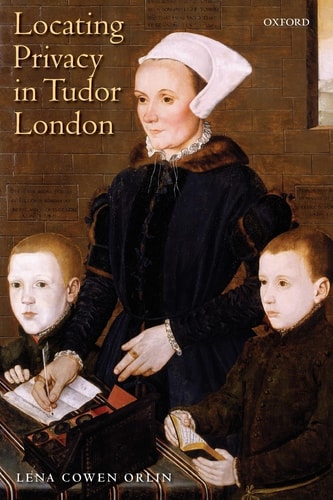
Locating Privacy in Tudor London asks new questions about where private life was lived in the early modern period, about where evidence of it has been preserved, and about how progressive and coherent its history can be said to have been. The Renaissance and the Reformation are generally taken to have produced significant advances in individuality, subjectivity, and interiority, especially among the elite, but this study of middling-sort culture shows privacy to have been an object of suspicion, of competing priorities, and of compulsory betrayals. The institutional archives of civic governance, livery companies, parish churches, and ecclesiastical courts reveal the degree to which society organized itself around principles of preventing privacy, as a condition of order. Also represented in the discussion are such material artefacts as domestic buildings and household furnishings, which were routinely experienced as collective and monitory agents rather than spheres of exclusivity and self-expression. In 'everyday' life, it is argued, economic motivations were of more urgent concern than the political paradigms that have usually informed our understanding of the Renaissance. Locating Privacy pursues the case study of Alice Barnham (1523-1604), a previously unknown merchant-class woman, subject of one of the earliest family group paintings from England. Her story is touched by many of the changes-in social structure, religion, the built environment, the spread of literacy, and the history of privacy-that define the sixteenth century. The book is of interest to literary, social, cultural, and architectural historians, to historians of the Reformation and of London, and to historians of gender and women's studies.
Menrva's Summary
THE THESIS
This study investigates the conceptual and physical existence of privacy in Tudor London, challenging the assumption that the Renaissance and Reformation fostered a linear progression toward modern individuality. Lena Cowen Orlin, a scholar of early modern literature and culture, utilizes institutional archives and material evidence to argue that sixteenth-century society often viewed privacy with suspicion. By examining the lives of the middling sort, the author demonstrates that civic and religious institutions actively discouraged private life to maintain social order and collective control.
THE SCOPE MAP
What You Will Find
- Analysis of institutional archives from civic governance, livery companies, and ecclesiastical courts.
- Examination of domestic architecture and household furnishings as agents of social monitoring.
- A detailed case study of Alice Barnham, a merchant-class woman from the sixteenth century.
Scope Limits
- The study focuses primarily on the middling sort rather than the aristocracy or the impoverished classes.
- It does not provide a comprehensive history of privacy across all of Europe, remaining centered on the specific context of London.
THE AUTHORITY PERSPECTIVE
Historians and scholars of the early modern period recognize this work as a significant contribution to the study of domestic space and social regulation. Readers frequently note the academic density of the prose and the author's meticulous use of primary source evidence to reconstruct the daily lives of non-elite citizens.
Page Count:
368
Publication Date:
2008-01-01
Publisher:
Oxford University Press
ISBN-10:
0191527610
ISBN-13:
9780191527616
History
Gender Studies
Social History
London England
English
Cultural History
English & College Success
Architectural History
Tudor England
Early Modern
Community Tags
Other Editions(4)


Similar Books








Reader Comments
Share Your Thoughts
No comments yet. Be the first to share your thoughts!