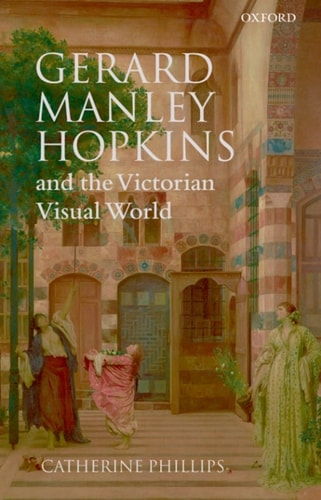
Gerard Manley Hopkins and the Victorian Visual World
0
0
As an Amazon Associate and affiliate partner, Menrva Books earns from qualifying purchases. Learn more
Author Description
Gerard Manley Hopkins initially planned to become a poet-artist. For five years he trained his eye, learned about contemporary art and architecture, and made friends in the Pre-Raphaelite circle. In her fascinating and beautifully illustrated book, Catherine Phillips, whose knowledge of Hopkins's poems is expert, uses letters, new archival material, and contemporary publications to reconstruct the visual world Hopkins knew between 1862 and 1889, and especially in the 1860s, with its illustrated journals, art exhibitions, Gothic architecture, photographic shows, and changing art criticism. Phillips identifies three artistic contexts for the Hopkins's life: his childhood circle of artistic relatives who were important in shaping his early vision; his friends at university and the criticism he absorbed while there that inflected his view as a young man; and the mature religious beliefs which came to govern his understanding of a visual world interconnected with an eternal one. With chapters devoted to Hopkins own drawings, and to visual theories of the time, Phillips is able to suggests fresh links between this visual world and the startling originality of Hopkins's mature writing that will alter radically our understanding of Hopkins's practice as a poet.
Menrva's Summary
THE THESIS
This work investigates how Gerard Manley Hopkins's early training as an artist and his engagement with the Victorian visual environment informed the unique stylistic development of his mature poetry. Catherine Phillips, a recognized scholar of Hopkins's work, utilizes primary source letters, archival documents, and contemporary art criticism to map the visual influences present during the poet's formative years. The book argues that Hopkins's aesthetic vision was not isolated but deeply rooted in the artistic movements, architectural trends, and visual theories of the late nineteenth century.
THE SCOPE MAP
What You Will Find
- Analysis of Hopkins's personal drawings and artistic training
- Examination of the Pre-Raphaelite circle and its influence on his early vision
- Contextualization of Victorian art exhibitions, photography, and Gothic architecture
- Exploration of the intersection between religious belief and visual perception
Scope Limits
- The study focuses primarily on the period between 1862 and 1889
- It does not provide a comprehensive biography of the poet's entire life
THE AUTHORITY PERSPECTIVE
Scholars and critics recognize this text as a significant contribution to the understanding of Hopkins's creative process through the lens of visual culture. Readers frequently note the academic rigor and the depth of archival research presented in the analysis.
Page Count:
320
Publication Date:
2007-01-01
Publisher:
OUP Oxford
ISBN-10:
0191528196
ISBN-13:
9780191528194
Poetry
Biography
Cultural History
English & College Success
Literary Criticism
Art History
English
Community Tags
Similar Books