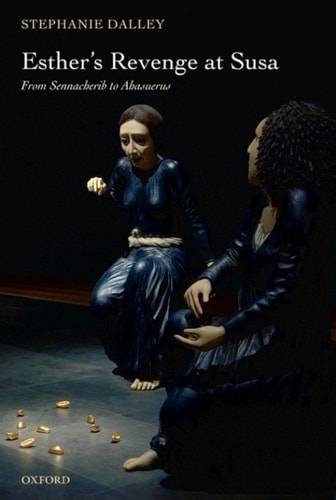
Esther's Revenge at Susa: From Sennacherib to Ahasuerus
0
0
As an Amazon Associate and affiliate partner, Menrva Books earns from qualifying purchases. Learn more
Author Description
Why are the names of the chief characters in the biblical Book of Esther those of Mesopotamian deities? Stephanie Dalley argues that the narrative reflects real happenings in seventh-century Assyria, where the widespread belief that revenge belongs to the gods explains why Assyrian kings described punitive campaigns as divine acts, leading to the mythologizing of certain historical events. Ashurbanipal's sack of Susa, led by the deities Ishtar and Marduk, underlies the Hebrew story of Esther, and that story contains traces of the cultic calendar of Ishtar-of-Nineveh. Dalley traces the way in which the long-term settlement of `lost tribes' in Assyria, revealed by the fruits of excavation in Iraq and Syria, inspired a blend of pagan and Jewish traditions.
Menrva's Summary
THE THESIS
This work investigates the historical origins of the biblical Book of Esther by proposing that its narrative structure and character names are rooted in seventh-century Assyrian political and religious events. Stephanie Dalley, an expert in Assyriology, utilizes archaeological evidence from Iraq and Syria alongside textual analysis of Mesopotamian records. She argues that the Hebrew story of Esther functions as a mythologized account of Ashurbanipal's sack of Susa, incorporating elements of the cultic calendar of Ishtar-of-Nineveh and the experiences of displaced populations in the region.
THE SCOPE MAP
What You Will Find
- Analysis of Mesopotamian deity names within the Book of Esther
- Historical reconstruction of the sack of Susa under Ashurbanipal
- Examination of the cultic calendar of Ishtar-of-Nineveh
- Evidence regarding the settlement of displaced tribes in Assyria
Scope Limits
- Does not provide a comprehensive theological commentary on the Book of Esther
- Does not focus on later medieval or modern interpretations of the text
THE AUTHORITY PERSPECTIVE
Scholars recognize this text as a specialized contribution to the study of the intersection between Assyrian history and biblical literature. Readers frequently note the academic density of the prose and the author's reliance on specific archaeological findings to support her historical claims.
Page Count:
280
Publication Date:
2008-01-01
Publisher:
Oxford University Press
ISBN-10:
0191527122
ISBN-13:
9780191527128
History
Religion
Near East
Assyriology
English & College Success
English
Mythology
Community Tags
Similar Books