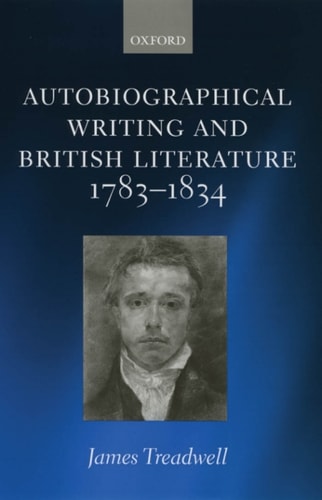
Autobiographical Writing and British Literature, 1783-1834
0
0
As an Amazon Associate and affiliate partner, Menrva Books earns from qualifying purchases. Learn more
Author Description
The word 'autobiography' is a late eighteenth-century coinage; yet by 1826 it was used as the title for a multi-volume anthology of self-writing, and in 1834 Thomas Carlyle wrote of 'these Autobiographical times of ours'. Over the course of those few decades, readers and writers came to recognize and name a new genre. This book is the first full study of the phenomenon, examining both the conditions and the practice of autobiographical writing in Romantic literature. Historians of autobiography have often pointed to the turn of the nineteenth century as a pivotal moment. In Rousseau and De Quincey's 'Confessions', Wordsworth's 'Prelude', and other canonical documents, it has been argued, self-writing begins to serve the purpose of expressing the individuality, autonomy, and interiority of the self. A more wide-ranging view of the actual state of autobiography at the time exposes this narrative as a misrepresentation. Self-writing does gain a new kind of prominence around 1800; not, however, because it articulates 'Romantic' ideologies of selfhood, but because it becomes a focus of scrutiny, and of contention. The decades of the Romantic period identified themselves as 'Autobiographical times' -- but did so anxiously. This book asks: what forms did that recognition and that anxiety take within the literary culture of the period? What did autobiography mean to Romantic readers and writers? How do autobiographical texts of the period reflect, express, and negotiate these conditions? As well as reading a wide variety of those documents, with single chapters devoted to works by Coleridge, Byron, and Lamb, Treadwell examines writing on and around autobiography: essays, reviews, and other forms of commentary. By preserving a continuous relation between the texts and their contexts, this book offers the first proper study of what is actually meant by 'Romantic autobiography'.
Menrva's Summary
THE THESIS
This book investigates the emergence of autobiography as a distinct literary genre during the British Romantic period, questioning why the era identified itself as 'autobiographical' despite significant cultural anxiety. James Treadwell, a scholar of Romantic literature, challenges the conventional view that self-writing in this era was primarily a tool for expressing individual autonomy. Instead, he argues that the rise of the genre was driven by intense public scrutiny and contention regarding the nature of the self. By analyzing the interplay between canonical texts and contemporary commentary, Treadwell provides a framework for understanding how Romantic writers negotiated the pressures of self-representation.
THE SCOPE MAP
What You Will Find
- Analysis of the historical emergence of the term 'autobiography' between 1783 and 1834.
- Examination of canonical works by authors including Wordsworth, Coleridge, Byron, and Lamb.
- Review of contemporary essays, critical reviews, and cultural commentary from the period.
Scope Limits
- The study does not focus on post-1834 developments in autobiographical writing.
- The analysis is restricted to the British literary context and does not provide a global history of the genre.
THE AUTHORITY PERSPECTIVE
Scholars recognize this work as a foundational study that corrects long-standing misconceptions about the origins of Romantic self-writing. Readers frequently note the academic density of the prose, which provides a rigorous examination of the period's literary culture.
Page Count:
268
Publication Date:
2005-01-01
Publisher:
Oxford University Press
ISBN-10:
0191532363
ISBN-13:
9780191532368
Autobiography
British literature
Literary Criticism
English & College Success
English
Literature History
Romanticism
Community Tags
Similar Books