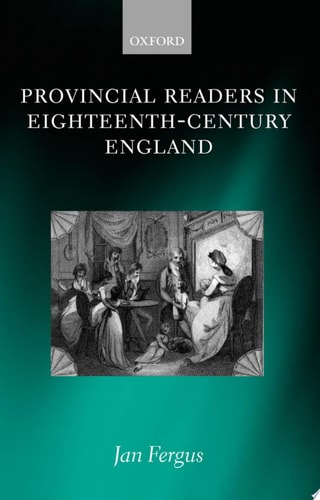
Provincial Readers in Eighteenth-Century England
0
0
As an Amazon Associate and affiliate partner, Menrva Books earns from qualifying purchases. Learn more
Author Description
Many scholars have written about eighteenth-century English novels, but no one really knows who read them. This study provides historical data on the provincial reading publics for various forms of fiction - novels, plays, chapbooks, children's books, and magazines. Archival records of Midland booksellers based in five market towns and selling printed matter to over thirty-three hundred customers between 1744 and 1807 form the basis for new information about who actually bought and borrowed different kinds of fiction in eighteenth-century provincial England. This book thus offers the first solid demographic information about actual readership in eighteenth-century provincial England, not only about the class, profession, age, and sex of readers but also about the market of available fiction from which they made their choices - and some speculation about why they made the choices they did. Contrary to received ideas, men in the provinces were the principal customers for eighteenth-century novels, including those written by women. Provincial customers preferred to buy rather than borrow fiction, and women preferred plays and novels written by women - women's works would have done better had women been the principal consumers. That is, demand for fiction (written by both men and women) was about equal for the first five years, but afterward the demand for women's works declined. Both men and women preferred novels with identifiable authors to anonymous ones, however, and both boys and men were able to cross gender lines in their reading. Goody Two-Shoes was one of the more popular children's books among Rugby schoolboys, and men read the Lady's Magazine. These and other findings will alter the way scholars look at the fiction of the period, the questions asked, and the histories told of it.
Menrva's Summary
THE THESIS
This study investigates the demographic composition and reading habits of provincial English populations during the eighteenth century to determine who actually consumed contemporary fiction. Jan Fergus, a scholar of eighteenth-century literature, utilizes archival records from Midland booksellers to challenge prevailing assumptions about the period's readership. By analyzing transaction data from over thirty-three hundred customers between 1744 and 1807, the author constructs a demographic profile that identifies the class, profession, age, and gender of readers, while examining the specific market of available printed materials.
THE SCOPE MAP
What You Will Find
- Demographic analysis of provincial readers including class, profession, age, and sex.
- Data on the consumption of novels, plays, chapbooks, children's books, and magazines.
- Comparative study of purchasing versus borrowing habits in five market towns.
Scope Limits
- The study is geographically restricted to specific Midland market towns.
- The research is confined to the period between 1744 and 1807.
THE AUTHORITY PERSPECTIVE
Scholars recognize this work as a significant empirical contribution to the history of the book, providing necessary data to correct long-standing assumptions about eighteenth-century literary consumption. The text is frequently cited for its rigorous use of archival records to demystify the demographics of the provincial reading public.
Page Count:
326
Publication Date:
2007-01-01
Publisher:
OUP Oxford
ISBN-10:
0191538205
ISBN-13:
9780191538209
History
Literary Criticism
Book History
English
Sociology of Literature
Eighteenth Century
English & College Success