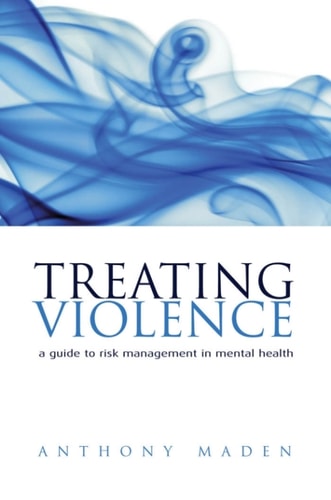
Treating Violence: A Guide to Risk Management in Mental Health
0
0
As an Amazon Associate and affiliate partner, Menrva Books earns from qualifying purchases. Learn more
Author Description
Treating Violence deals with the problem of violence by mental health patients. Over the last twenty years violence by the mentally ill has grown from just a peripheral concern to dominate debate about services. Scientific studies have established beyond reasonable doubt that mental disorders lead to violence in a minority of sufferers, whilst a series of homicide inquiries brought the media spotlight to bear on the real and imagined failings of mental health services. Consequently, health services have had violence risk assessment thrust upon them by worried managers and politicians. Clinicians were bewildered by the growing number of risk scales and they felt vulnerable to criticism when things went wrong. This book provides a way out of the confusion. It summarises the evidence, critically reviews risk assessment methods, and presents a strong case for improving management through structured clinical assessment. In this provocative and controversial account, standardised risk assessment is discussed in a critical, non-technical way, with a reminder that nobody can predict the future. There is advice for the clinician on when and how to use standardised assessment, along with a strong defence of clinical methods. Topics include: research on violence, mental health, and risk prediction; the ethics of violence risk assessment; homicide inquiries in the UK, with the results of a new study reviewing their findings; a discussion of professional attitudes towards violence risk; a description of risk assessment tools and recommendations for their use; and a strong defence of structured clinical assessment as the best way of managing risk. This is a book that should be read by anybody working in front line mental health services or criminal justice. It will also be of interest to those who have read the headlines about mental illness and violence and want to know more about the facts and the controversies that lie behind them.
Menrva's Summary
THE THESIS
This book investigates the complex intersection of mental health disorders and violent behavior, specifically addressing how clinicians can effectively manage risk in a climate of increasing public and political scrutiny. Anthony Maden, a clinical expert in the field, synthesizes decades of research and homicide inquiry data to challenge the over-reliance on standardized risk scales. He argues for a return to structured clinical assessment as the most reliable method for managing patient risk while acknowledging the inherent limitations of predicting future behavior.
THE SCOPE MAP
What You Will Find
- Analysis of research linking mental disorders to violent behavior
- Critical review of common standardized risk assessment tools
- Examination of UK-based homicide inquiries and their systemic findings
- Ethical considerations regarding patient risk and professional responsibility
- Frameworks for implementing structured clinical assessment in front-line services
Scope Limits
- The text does not provide a universal predictive model for violence, as the author maintains that future behavior cannot be perfectly forecasted.
- The analysis is heavily focused on the UK mental health and criminal justice context, which may limit direct application in other legal jurisdictions.
THE AUTHORITY PERSPECTIVE
Experts and clinicians frequently cite this work as a necessary counter-balance to the trend of purely algorithmic risk assessment in psychiatric care. Readers often note the accessible, non-technical prose that makes complex clinical and ethical arguments clear for both practitioners and interested laypeople.
Page Count:
208
Publication Date:
2007-01-01
Publisher:
Oxford University Press
ISBN-10:
0191566896
ISBN-13:
9780191566899
Psychology
Clinical Psychiatry
Medical
Mental Health
Allied Health
Criminology
Violence
Public Health
Community Tags
Similar Books