Image and Audience: Rethinking Prehistoric Art
0
0
As an Amazon Associate and affiliate partner, Menrva Books earns from qualifying purchases. Learn more
Author Description
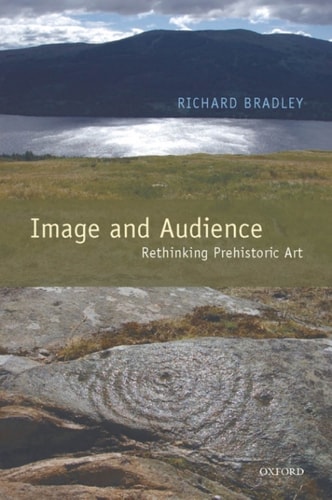
There have been many accounts of prehistoric 'art', but nearly all of them begin by assuming that the concept is a useful one. In this extensively illustrated study, Richard Bradley asks why ancient objects were created and when and how they were used. He considers how the first definitions of prehistoric artworks were made, and the ways in which they might be related to practices in the visual arts today. Extended case studies of two immensely popular and much-visited sites illustrate his argument: one considers the megalithic tombs of Western Europe, whilst the other investigates the decorated metalwork and rock carvings of Bronze Age Scandinavia.
Menrva's Summary
THE THESIS
This book investigates the validity of the concept of 'art' when applied to prehistoric objects and explores the functional contexts of these creations. Richard Bradley, a prominent archaeologist, challenges traditional assumptions by examining the original intent and usage of ancient artifacts. He argues that modern definitions of art often obscure the practical and ritualistic roles these objects played in their original societies, proposing a framework that prioritizes archaeological context over aesthetic categorization.
THE SCOPE MAP
What You Will Find
- Analysis of the historiography of prehistoric art definitions
- Comparative study of megalithic tombs in Western Europe
- Investigation of Bronze Age Scandinavian metalwork and rock carvings
- Theoretical framework for interpreting visual culture in non-literate societies
Scope Limits
- Does not provide a comprehensive global survey of all prehistoric art
- Does not focus on Paleolithic cave art, concentrating instead on later periods
THE AUTHORITY PERSPECTIVE
Scholars and students of archaeology frequently cite this work for its critical approach to the intersection of art history and material culture. Experts highlight the book as a necessary intervention for those seeking to move beyond purely aesthetic interpretations of ancient artifacts.
Page Count:
280
Publication Date:
2009-01-01
Publisher:
Oxford University Press
ISBN-10:
0191569550
ISBN-13:
9780191569555
Anthropology
Prehistory
Archaeology
Art History
Community Tags
Similar Books