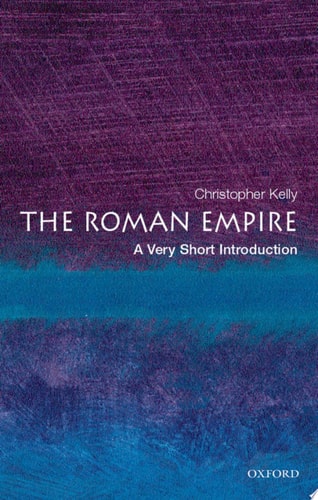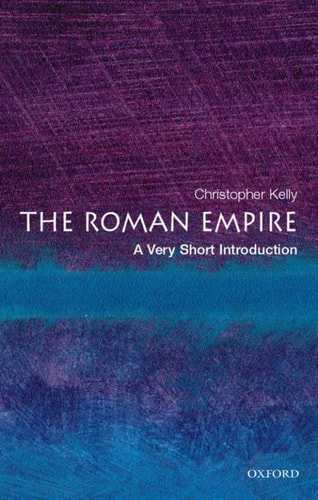
The Roman Empire: A Very Short Introduction
0
0
As an Amazon Associate and affiliate partner, Menrva Books earns from qualifying purchases. Learn more
Author Description
The Roman Empire was a remarkable achievement. It had a population of sixty million people spread across lands encircling the Mediterranean and stretching from drizzle-soaked northern England to the sun-baked banks of the Euphrates in Syria, and from the Rhine to the North African coast. It was, above all else, an empire of force - employing a mixture of violence, suppression, order, and tactical use of power to develop an astonishingly uniform culture. This Very Short Introduction covers the history of the Empire from Augustus (the first Emperor) to Marcus Aurelius, describing how the empire was formed, how it was run, its religions and its social structure. It examines how local cultures were "romanised" and how people in far away lands came to believe in the emperor as a god. The book also examines how the Roman Empire has been considered and depicted in more recent times, from the writings of Edward Gibbon, to the differing attitudes of the Victorians and recent Hollywood blockbuster films. ABOUT THE SERIES: The Very Short Introductions series from Oxford University Press contains hundreds of titles in almost every subject area. These pocket-sized books are the perfect way to get ahead in a new subject quickly. Our expert authors combine facts, analysis, perspective, new ideas, and enthusiasm to make interesting and challenging topics highly readable.
Menrva's Summary
THE THESIS
How did the Roman Empire maintain control over a vast, diverse population while fostering a uniform culture across three continents? Christopher Kelly, a Fellow and Director of Studies in Classics at Corpus Christi College, Cambridge, utilizes historical records and archaeological evidence to analyze the mechanisms of Roman power. He argues that the empire functioned through a calculated combination of military force, administrative suppression, and the strategic integration of local elites into the imperial structure.
THE SCOPE MAP
What You Will Find
- Historical analysis of the period from Augustus to Marcus Aurelius
- Examination of social structures, religious practices, and the process of romanisation
- Discussion of the historiography of Rome, including the influence of Edward Gibbon and modern media
Scope Limits
- Does not provide an exhaustive chronological narrative of every emperor or military campaign
- Does not focus on the post-Marcus Aurelius decline or the transition to the Byzantine era
THE AUTHORITY PERSPECTIVE
Readers and scholars frequently note the accessibility and conciseness of this text, making it a standard entry point for students and general readers interested in Roman history. Experts highlight the author's ability to synthesize complex administrative and cultural themes into a brief, coherent framework.
Page Count:
169
Publication Date:
2006-01-01
Publisher:
OUP Oxford
ISBN-10:
0191577847
ISBN-13:
9780191577840
Non-Fiction
History
Ancient History
Roman Empire