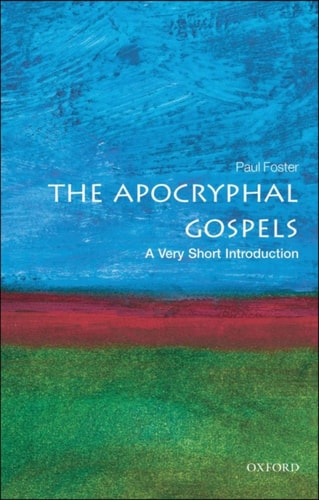
The Apocryphal Gospels: A Very Short Introduction
0
0
As an Amazon Associate and affiliate partner, Menrva Books earns from qualifying purchases. Learn more
Author Description
This Very Short Introduction offers a clear, accessible, and concise account of the apocryphal gospels - exploring their origins, their discovery, and discussing how the various texts have been interpreted both by the Church and beyond. Looking at texts from the Gospels from Nag Hammadi to the Dialogues with the Risen Saviour, Paul Foster shows how the apocryphal gospels reflect the diversity that existed within early Christianity, and examines the extent to which they can be used to reconstruct an accurate portrait of the historical Jesus. Including discussions of controversies and case-studies such as the alleged hoax surrounding the discovery of Secret Mark, Foster concludes that the non-canonical texts, considered in the correct context, offer us an important window on the vibrant and multi-faceted face of early Christianity. ABOUT THE SERIES: The Very Short Introductions series from Oxford University Press contains hundreds of titles in almost every subject area. These pocket-sized books are the perfect way to get ahead in a new subject quickly. Our expert authors combine facts, analysis, perspective, new ideas, and enthusiasm to make interesting and challenging topics highly readable.
Menrva's Summary
THE THESIS
This book investigates the historical, theological, and cultural significance of the apocryphal gospels within the context of early Christianity. Paul Foster, a professor of New Testament and Early Christianity, utilizes academic analysis to evaluate how these non-canonical texts inform our understanding of the diverse religious landscape of the first few centuries. He argues that these documents, while excluded from the biblical canon, provide essential insights into the development of Christian thought and the quest for the historical Jesus.
THE SCOPE MAP
What You Will Find
- Historical overview of the discovery and classification of apocryphal texts
- Analysis of specific documents including the Nag Hammadi library and the Dialogues with the Risen Saviour
- Examination of the relationship between canonical and non-canonical gospels
- Case studies on controversies such as the Secret Mark manuscript
Scope Limits
- Does not provide a comprehensive translation of every known apocryphal fragment
- Does not focus on modern theological debates outside of historical context
THE AUTHORITY PERSPECTIVE
Experts and readers recognize this text as a reliable, concise entry point for students and laypeople interested in early Christian history. The prose is noted for its academic clarity and ability to distill complex historical debates into an accessible format.
Page Count:
152
Publication Date:
2009-01-01
Publisher:
OUP Oxford
ISBN-10:
0191578959
ISBN-13:
9780191578953
History
Religion
Bibles
Theology
Christianity
Community Tags
Similar Books