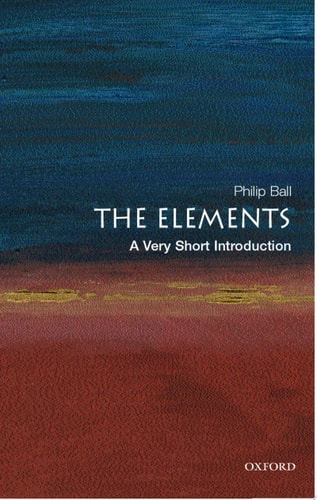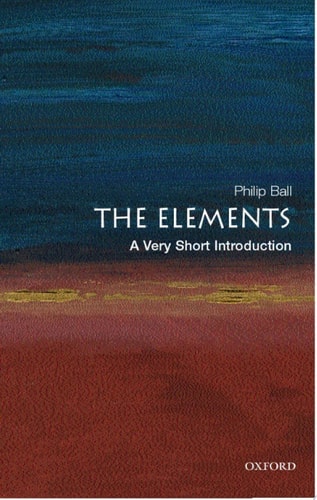
The Elements: A Very Short Introduction
0
0
As an Amazon Associate and affiliate partner, Menrva Books earns from qualifying purchases. Learn more
Author Description
This Very Short Introduction traces the history and cultural impact of the elements on humankind, and examines why people have long sought to identify the substances around them. Looking beyond the Periodic Table, the author examines our relationship with matter, from the uncomplicated vision of the Greek philosophers, who believed there were four elements - earth, air, fire, and water - to the work of modern-day scientists in creating elements such as hassium and meitnerium. Packed with anecdotes, The Elements is a highly engaging and entertaining exploration of the fundamental question: what is the world made from? ABOUT THE SERIES: The Very Short Introductions series from Oxford University Press contains hundreds of titles in almost every subject area. These pocket-sized books are the perfect way to get ahead in a new subject quickly. Our expert authors combine facts, analysis, perspective, new ideas, and enthusiasm to make interesting and challenging topics highly readable.
Menrva's Summary
THE THESIS
This book investigates the fundamental question of what the physical world is composed of and how human understanding of matter has evolved over time. Philip Ball, a science writer with extensive experience in chemistry and physics, utilizes historical accounts and modern scientific data to trace the development of the concept of elements. He presents a framework that bridges the gap between ancient philosophical inquiries and the complex synthetic achievements of contemporary particle physics.
THE SCOPE MAP
What You Will Find
- Historical evolution of elemental theory from Greek philosophy to modern chemistry
- Cultural impact of material discovery on human society
- Analysis of the Periodic Table and the creation of synthetic elements
- Anecdotal evidence regarding the human relationship with matter
Scope Limits
- Does not provide a comprehensive technical textbook on chemical bonding or reaction mechanisms
- Does not cover the entirety of subatomic particle physics beyond the context of elemental discovery
THE AUTHORITY PERSPECTIVE
Experts and readers frequently note that this text serves as an accessible entry point for those seeking a broad overview of chemical history without overwhelming technical jargon. The prose is widely regarded as clear and engaging, making it a standard recommendation for students and curious laypeople interested in the foundations of physical science.
Page Count:
193
Publication Date:
2004-01-01
Publisher:
OUP Oxford
ISBN-10:
0191578258
ISBN-13:
9780191578250
Non-Fiction
Science
Chemistry
Science History
Earth Sciences
Reference