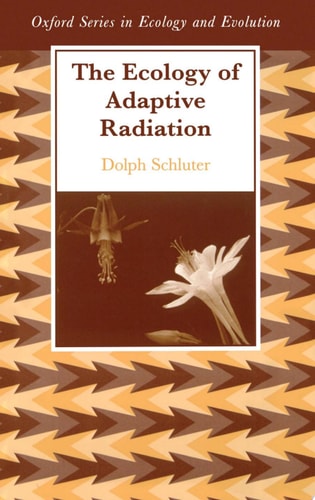
The Ecology of Adaptive Radiation
0
0
As an Amazon Associate and affiliate partner, Menrva Books earns from qualifying purchases. Learn more
Author Description
Adaptive Radiation Is The Evolution Of Diversity Within A Rapidly Multiplying Lineage. It Can Cause A Single Ancestral Species To Differentiate Into An Impressively Vast Array Of Species Inhabiting A Variety Of Environments. Much Of Life's Diversity Has Arisen During Adaptive Radiations. Some Of The Most Famous Recent Examples Include The East African Cichlid Fishes, The Hawaiian Silverswords, And Of Course, Darwin's Galápagos Finches. This Book Evaluates The Causes Of Adaptive Radiation. It Focuses On The 'ecological' Theory Of Adaptive Radiation, A Body Of Ideas That Began With Darwin And Was Developed Through The Early Part Of The 20th Century. This Theory Proposes That Phenotypic Divergence And Speciation In Adaptive Radiation Are Caused Ultimately By Divergent Natural Selection Arising From Differences In Environment And Competition Between Species. In The Ecology Of Adaptive Radiation The Author Re-evaluates The Ecological Theory, Along With Its Most Significant Extensions And Challenges, In The Light Of All The Recent Evidence. This Important Book Is The First Full Exploration Of The Causes Of Adaptive Radiation To Be Published For Decades, Written By One Of The World's Best Young Evolutionary Biologists.
Menrva's Summary
THE THESIS
This book investigates the ecological mechanisms that drive adaptive radiation, specifically testing the hypothesis that divergent natural selection—fueled by environmental differences and interspecific competition—is the primary engine of speciation. Dolph Schluter, a prominent evolutionary biologist, synthesizes historical theoretical frameworks with contemporary empirical data to evaluate the validity of the ecological theory of adaptive radiation. He systematically addresses the core tenets established by Darwin and subsequent researchers, providing a rigorous assessment of how phenotypic divergence occurs across diverse lineages.
THE SCOPE MAP
What You Will Find
- Analysis of phenotypic divergence and speciation processes.
- Examination of the role of natural selection in environmental adaptation.
- Case studies including East African cichlid fishes, Hawaiian silverswords, and Galapagos finches.
- Evaluation of competition-driven character displacement.
Scope Limits
- The text focuses primarily on the ecological theory of adaptive radiation rather than genetic or molecular mechanisms of mutation.
- It does not provide an exhaustive survey of all evolutionary theories outside the ecological framework.
THE AUTHORITY PERSPECTIVE
Experts recognize this work as a foundational text that successfully bridges classical evolutionary theory with modern ecological research. Readers frequently note the academic density of the prose, which is intended for students and professionals in the biological sciences.
Page Count:
296
Publication Date:
2000-01-01
Publisher:
Oup Oxford
ISBN-10:
0191588326
ISBN-13:
9780191588327
Science
Natural history
Evolutionary Biology
Zoology
Ecology