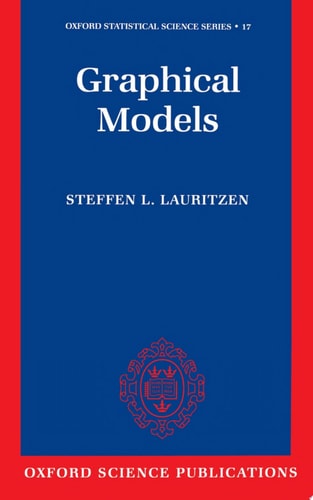
Graphical Models
0
0
As an Amazon Associate and affiliate partner, Menrva Books earns from qualifying purchases. Learn more
Author Description
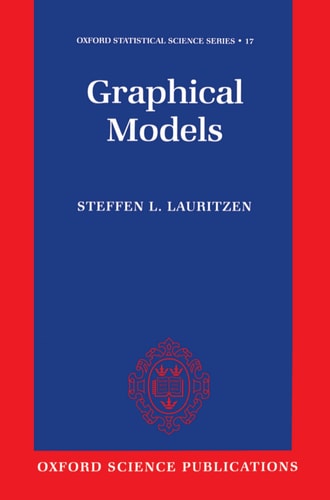
The Idea Of Modelling Systems Using Graph Theory Has Its Origin In Several Scientific Areas: In Statistical Physics (the Study Of Large Particle Systems), In Genetics (studying Inheritable Properties Of Natural Species), And In Interactions In Contingency Tables. The Use Of Graphical Models In Statistics Has Increased Considerably Over Recent Years And The Theory Has Been Greatly Developed And Extended. This Book Provides The First Comprehensive And Authoritative Account Of The Theory Of Graphical Models And Is Written By A Leading Expert In The Field. It Contains The Fundamental Graph Theory Required And A Thorough Study Of Markov Properties Associated With Various Type Of Graphs. The Statistical Theory Of Log-linear And Graphical Models For Contingency Tables, Covariance Selection Models, And Graphical Models With Mixed Discrete-continous Variables In Developed Detail. Special Topics, Such As The Application Of Graphical Models To Probabilistic Expert Systems, Are Described Briefly, And Appendices Give Details Of The Multivarate Normal Distribution And Of The Theory Of Regular Exponential Families. The Author Has Recently Been Awarded The Rss Guy Medal In Silver 1996 For His Innovative Contributions To Statistical Theory And Practice, And Especially For His Work On Graphical Models.
Menrva's Summary
THE THESIS
This text investigates the mathematical foundations and statistical applications of graphical models as a framework for representing complex systems. Steffen L. Lauritzen, a recognized authority in statistical theory, synthesizes developments from physics, genetics, and contingency table analysis to provide a formal account of Markov properties and model selection. The work establishes a rigorous structure for understanding how graph theory informs statistical inference in both discrete and continuous domains.
THE SCOPE MAP
What You Will Find
- Fundamental graph theory principles applied to statistical modeling
- Detailed analysis of Markov properties across various graph types
- Statistical theory for log-linear and covariance selection models
- Methodologies for handling mixed discrete-continuous variables
- Appendices covering multivariate normal distributions and regular exponential families
Scope Limits
- The text provides only brief coverage of probabilistic expert systems
- It assumes a high level of mathematical maturity and prior statistical knowledge
THE AUTHORITY PERSPECTIVE
Experts and academics regard this work as a foundational text for the study of graphical models due to its comprehensive and formal approach. Readers frequently note the high level of technical density, making it a standard reference for researchers and graduate students in statistics and machine learning.
Page Count:
308
Publication Date:
1996-01-01
Publisher:
Clarendon Press
ISBN-10:
019159122X
ISBN-13:
9780191591228
Data Analysis
Mathematics
Statistics
Probability
Computer Science
Graph Theory