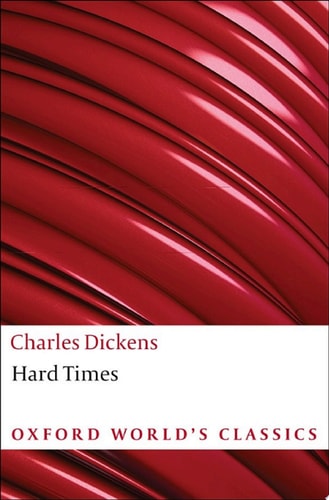
Hard Times
0
0
As an Amazon Associate and affiliate partner, Menrva Books earns from qualifying purchases. Learn more
Author Description
Hard Times is Dickens's shortest novel, and arguably his greatest triumph. A useful appendix of the author's working notes, together with an enlightening introduction and full explanatory notes, will ensure that this edition becomes the obvious choice for anyone studying the novel. Paul Schlike is Lecturer in English at the University of Aberdeen. ABOUT THE SERIES: For over 100 years Oxford World's Classics has made available the widest range of literature from around the globe. Each affordable volume reflects Oxford's commitment to scholarship, providing the most accurate text plus a wealth of other valuable features, including expert introductions by leading authorities, helpful notes to clarify the text, up-to-date bibliographies for further study, and much more.
Menrva's Summary
THE PULSE
Thomas Gradgrind’s rigid philosophy of utilitarianism collides with the human need for imagination and empathy in the industrial town of Coketown. Driven by a belief that facts are the only essential component of education and life, Gradgrind imposes his cold, mechanical system upon his children and his community. His objective to suppress all fancy and emotion faces resistance from the unpredictable nature of human desire and the harsh realities of the working class. The narrative framework employs a third-person omniscient perspective to dissect the social and economic structures of Victorian England. As the characters navigate the consequences of a life devoid of wonder, the logical constraints of their environment begin to fracture under the weight of their suppressed spirits.
INSIDE THE PAGES
- Satirical portrayal of the utilitarian education system
- Sharp critique of industrialization and labor conditions
- Use of caricature to represent ideological extremes
- Exploration of the conflict between fact and fancy
- Detailed depiction of the bleak, soot-covered Coketown environment
- Complex character arcs involving moral redemption and failure
- Rhythmic, repetitive prose style emphasizing the monotony of the setting
- Thematic focus on the dehumanizing effects of economic rationalism
THE COLLECTIVE ECHO
Readers and critics frequently observe that this work serves as a pointed critique of the industrial age and the reduction of human experience to mere statistics. Discussion often centers on the effectiveness of Dickens’s satire in exposing the hypocrisy of those who prioritize profit over individual well-being. Many highlight the stark contrast between the mechanical, colorless world of the Gradgrind family and the vibrant, albeit troubled, life of the circus performers. The pacing is noted for its intensity, as the narrative moves toward the inevitable collapse of the protagonist's rigid worldview. Scholars often emphasize the book's enduring relevance in debates regarding the purpose of education and the necessity of empathy in a technological society.
Page Count:
337
Publication Date:
1998-01-01
Publisher:
OUP Oxford
ISBN-10:
0191605433
ISBN-13:
9780191605437
Satire
English
classic
Victorian
Industrial
English & College Success