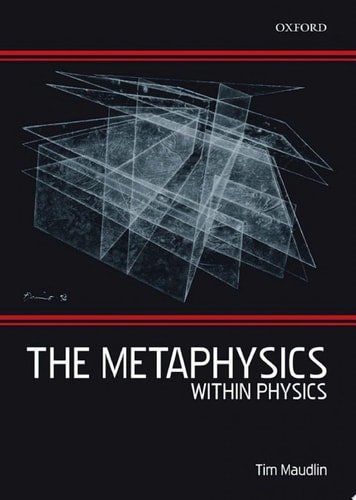
The Metaphysics Within Physics
0
0
As an Amazon Associate and affiliate partner, Menrva Books earns from qualifying purchases. Learn more
Author Description
What fundamental account of the world is implicit in physical theory? Physics straightforwardly postulates quarks and electrons, but what of the more intangible elements, such as laws of nature, universals, causation and the direction of time? Do they have a place in the physical structure of the world? Tim Maudlin argues that the ontology derived from physics takes a form quite different from those most commonly defended by philosophers. Physics postulates irreducible fundamental laws, eschews universals, does not require a fundamental notion of causation, and makes room for the passage of time. In a series of linked essays The Metaphysics Within Physics outlines an approach to metaphysics opposed to the Humean reductionism that motivates much analytical metaphysics.
Menrva's Summary
THE THESIS
This work investigates the fundamental ontological commitments implicit in modern physical theory, specifically questioning how concepts like laws of nature, causation, and time fit into a physicalist framework. Tim Maudlin, a prominent philosopher of physics, utilizes his expertise in the foundations of science to challenge the prevailing Humean reductionist consensus in analytical metaphysics. He argues that a rigorous examination of physical theory reveals a world structured by irreducible laws rather than the reductionist models favored by many contemporary philosophers.
THE SCOPE MAP
What You Will Find
- Analysis of the ontological status of laws of nature and universals.
- Examination of the direction of time and its role in physical structure.
- A critique of Humean reductionism and its influence on analytical metaphysics.
- Arguments regarding the necessity of causation in physical models.
Scope Limits
- The text does not provide a comprehensive history of metaphysics.
- It does not attempt to resolve all debates within quantum mechanics or general relativity.
THE AUTHORITY PERSPECTIVE
Experts recognize this text as a significant contribution to the philosophy of physics, frequently citing it for its clear articulation of non-Humean metaphysics. Readers often note the academic density of the prose, which requires a foundational understanding of both metaphysical terminology and physical theory to fully grasp the arguments.
Page Count:
208
Publication Date:
2007-01-01
Publisher:
OUP Oxford
ISBN-10:
0191607649
ISBN-13:
9780191607646
Philosophy
Science
Metaphysics
Physics
Philosophy of
Ontology
Community Tags
Other Editions(4)



Similar Books