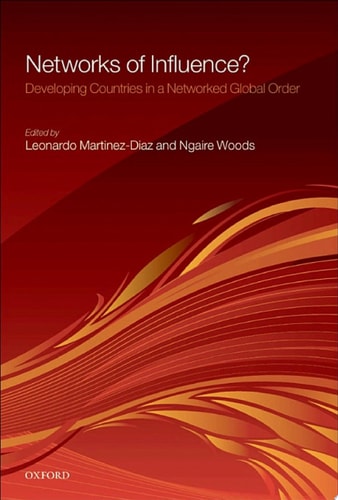
Networks of Influence?: Developing Countries in a Networked Global Order
0
0
As an Amazon Associate and affiliate partner, Menrva Books earns from qualifying purchases. Learn more
Author Description
Networks are thriving in global politics. Some bring policy-makers from different countries together to share problems and to forge possible solutions, free from rules of representation, decision-making, and transparency which constrain more formal international organizations. This book asks whether developing countries can benefit from such networks? Or are they safer to conduct their international relations in formal institutions? The answer varies. The key lies in how the network is structured and what it sets out to achieve. This book presents a fascinating account of how some networks have strengthened the position of developing country officials, both at home, and in their international negotiations. Equally, it points to conditions which make it perilous for developing countries to rely on networks.
Menrva's Summary
THE THESIS
This book investigates whether developing nations can effectively leverage informal global policy networks to advance their interests or if they remain better served by traditional, formal international institutions. Leonardo Martinez-Diaz and Ngaire Woods, both established scholars in international political economy, utilize a comparative framework to analyze the structural dynamics of these networks. They argue that the utility of a network for a developing country is contingent upon its internal architecture, its specific objectives, and the degree of transparency inherent in its decision-making processes.
THE SCOPE MAP
What You Will Find
- Analysis of informal policy-making networks versus formal international organizations
- Case studies of developing country participation in global governance
- Frameworks for evaluating network structure and influence
Scope Limits
- Does not provide an exhaustive list of every existing global network
- Focuses primarily on the strategic utility for developing nations rather than the internal mechanics of developed-nation hegemony
THE AUTHORITY PERSPECTIVE
Experts frequently cite this work as a foundational text for understanding the shift toward informal governance in international relations. Readers often note the academic density of the prose, which provides a rigorous analytical approach to a complex and evolving subject.
Page Count:
290
Publication Date:
2009-01-01
Publisher:
OUP Oxford
ISBN-10:
0191609846
ISBN-13:
9780191609848
Globalization
Capitalists and financiers
International relations
Developing Countries
Public Policy
Community Tags
Similar Books