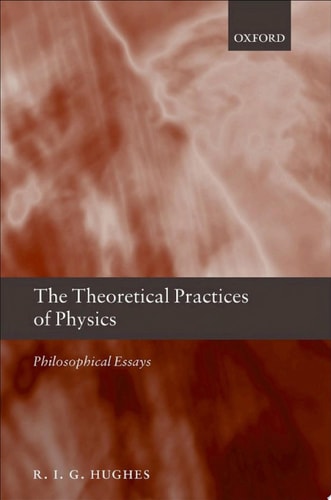
The Theoretical Practices of Physics: Philosophical Essays
0
0
As an Amazon Associate and affiliate partner, Menrva Books earns from qualifying purchases. Learn more
Author Description
R.I.G. Hughes presents a series of eight philosophical essays on the theoretical practices of physics. The first two essays examine these practices as they appear in physicists' treatises (e.g. Newton's Principia and Opticks) and journal articles (by Einstein, Bohm and Pines, Aharonov and Bohm). By treating these publications as texts, Hughes casts the philosopher of science in the role of critic. This premise guides the following six essays which deal with various concerns of philosophy and physics such as laws, disunities, models and representation, computer simulation, explanation, and the discourse of physics.
Menrva's Summary
THE THESIS
This collection investigates how the theoretical practices of physics can be analyzed through the lens of literary and critical theory to better understand the nature of scientific discourse. R.I.G. Hughes, a scholar in the philosophy of science, utilizes a methodology that treats foundational physics texts and journal articles as primary documents for critical interpretation. By applying this framework, the author argues that the philosopher of science functions effectively as a critic, uncovering the underlying structures of explanation, representation, and modeling within the discipline.
THE SCOPE MAP
What You Will Find
- Analysis of historical treatises including Newton's Principia and Opticks
- Examination of modern journal articles by Einstein, Bohm, and Pines
- Theoretical exploration of laws, disunities, and computer simulation in physics
- A critical framework for interpreting the discourse of physics
Scope Limits
- The text does not provide a comprehensive history of physics
- It does not offer technical instruction on performing physical experiments
THE AUTHORITY PERSPECTIVE
Scholars in the philosophy of science recognize this work as a distinct contribution to the study of scientific texts as discursive objects. Readers frequently note the academic density of the prose, which requires a background in both philosophy and theoretical physics to fully grasp the author's arguments.
Page Count:
291
Publication Date:
2009-01-01
Publisher:
OUP Oxford
ISBN-10:
0191609366
ISBN-13:
9780191609367
Philosophy
Epistemology
Physics
Philosophy of
Community Tags
Similar Books