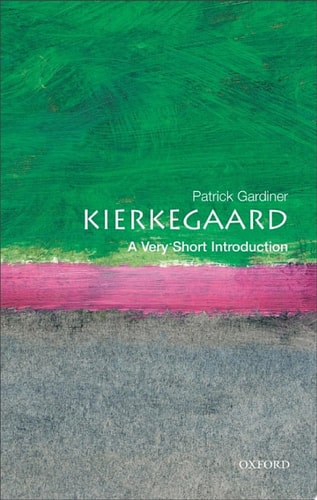
Kierkegaard: A Very Short Introduction
0
0
As an Amazon Associate and affiliate partner, Menrva Books earns from qualifying purchases. Learn more
Author Description
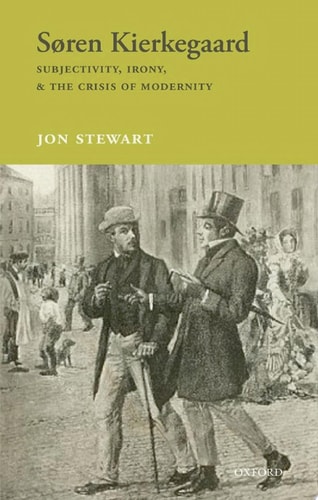
Soren Kierkegaard (1813-55), one of the most original thinkers of the nineteenth century, wrote widely on religious, psychological, and literary themes. This book shows how Kierkegaard developed his views in emphatic opposition to prevailing opinions. It describes his reaction to the ethical and religious theories of Kant and Hegel, and it also contrasts his position with doctrines advanced by men like Feuerbach and Marx. Kierkegaard's seminal diagnosis of the human condition, which emphasizes the significance of individual choice, has arguably been his most striking philosophical legacy, particularly for the growth of existentialism. Both that and his arresting but paradoxical conception of religious belief are critically discussed, and Patrick Gardiner concludes this lucid introduction by showing how Kierkegaard has influenced contemporary thought. ABOUT THE SERIES: The Very Short Introductions series from Oxford University Press contains hundreds of titles in almost every subject area. These pocket-sized books are the perfect way to get ahead in a new subject quickly. Our expert authors combine facts, analysis, perspective, new ideas, and enthusiasm to make interesting and challenging topics highly readable.
Menrva's Summary
THE THESIS
This book investigates the core philosophical contributions of Søren Kierkegaard and his role as a foundational figure in the development of existentialist thought. Patrick L. Gardiner, a noted scholar of philosophy, utilizes a biographical and thematic framework to analyze how Kierkegaard’s work emerged as a direct critique of nineteenth-century German idealism. The text examines the tension between individual subjective experience and the prevailing ethical and religious systems of the time, specifically targeting the influence of Kant and Hegel.
THE SCOPE MAP
What You Will Find
- An overview of Kierkegaard’s critique of Hegelian and Kantian ethics
- Analysis of the concept of individual choice and subjective truth
- Comparisons between Kierkegaard’s religious paradoxes and the doctrines of Marx and Feuerbach
Scope Limits
- Does not provide a comprehensive line-by-line exegesis of every Kierkegaardian text
- Excludes extensive biographical detail beyond what is necessary to contextualize his philosophical output
THE AUTHORITY PERSPECTIVE
Experts and students frequently cite this work as a highly accessible entry point for those unfamiliar with the complexities of existentialist philosophy. Readers note that the prose maintains academic rigor while remaining concise enough for a general audience to grasp the primary arguments.
Page Count:
144
Publication Date:
2002-01-01
Publisher:
OUP Oxford
ISBN-10:
019160447X
ISBN-13:
9780191604478
Biography
Philosophy
Non-Fiction
Existentialism
Intellectual History
History & Surveys
Community Tags
Other Editions(3)

Similar Books