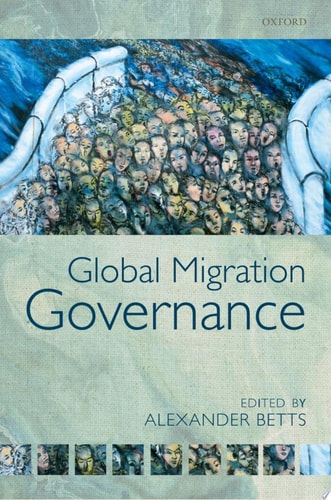
Global Migration Governance
0
0
As an Amazon Associate and affiliate partner, Menrva Books earns from qualifying purchases. Learn more
Author Description
Unlike many other trans-boundary policy areas, international migration lacks coherent global governance. There is no UN migration organization and states have signed relatively few multilateral treaties on migration. Instead sovereign states generally decide their own immigration policies. However, given the growing politicisation of migration and the recognition that states cannot always address migration in isolation from one another, a debate has emerged about what type of international institutions and cooperation are required to meet the challenges of international migration. Until now, though, that emerging debate on global migration governance has lacked a clear analytical understanding of what global migration governance actually is, the politics underlying it, and the basis on which we can make claims about what 'better' migration governance might look like. In order to address this gap, the book brings together a group of the world's leading experts on migration to consider the global governance of different aspects of migration. The chapters offer an accessible introduction to the global governance of low-skilled labour migration, high-skilled labour migration, irregular migration, lifestyle migration, international travel, refugees, internally displaced persons, human trafficking and smuggling, diaspora, remittances, and root causes. Each of the chapters explores the three same broad questions: What, institutionally, is the global governance of migration in that area? Why, politically, does that type of governance exist? How, normatively, can we ground claims about the type of global governance that should exist in that area? Collectively, the chapters enhance our understanding of the international politics of migration and set out a vision for international cooperation on migration.
Menrva's Summary
THE THESIS
This book investigates the current state of international migration governance and the political, institutional, and normative frameworks required to address global mobility challenges. The author, Paul Falcone, compiles contributions from leading migration experts to analyze why a centralized global migration organization remains absent and how sovereign states manage migration policy in an increasingly interconnected world. The text provides a structured analytical approach to understanding the complexities of international cooperation and the potential for improved governance models.
THE SCOPE MAP
What You Will Find
- Institutional analysis of migration governance across various sectors including labor, refugees, and human trafficking.
- A consistent three-part inquiry framework applied to every chapter: institutional structure, political motivation, and normative justification.
- Comprehensive coverage of diverse migration types such as high-skilled labor, irregular migration, and remittances.
Scope Limits
- The text does not provide a singular, unified policy proposal for a global migration agency.
- It does not offer an exhaustive historical account of all past migration treaties.
THE AUTHORITY PERSPECTIVE
Experts recognize this volume as a foundational text for understanding the fragmented nature of international migration policy. Readers frequently note the academic density of the prose, which serves as a primary resource for students and practitioners in international relations.
Page Count:
368
Publication Date:
2011-01-01
Publisher:
Oxford University Press
ISBN-10:
0191616745
ISBN-13:
9780191616747
Sociology
Globalization
Public Policy
Migration Studies
Professional Career & Trade
International relations
Community Tags
Similar Books