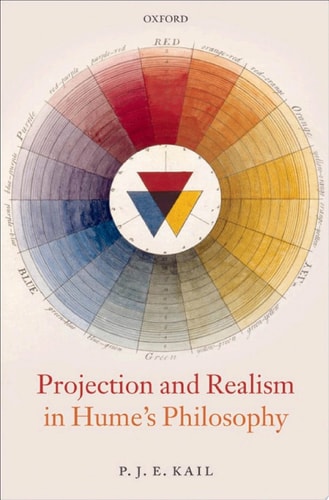
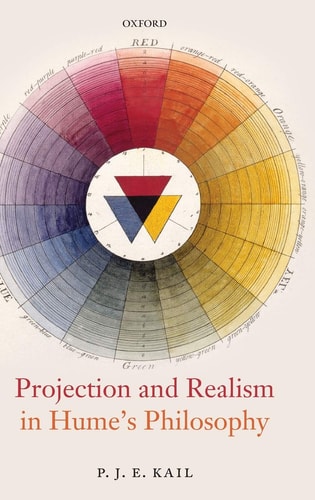
Projection and Realism in Hume's Philosophy
0
0
As an Amazon Associate and affiliate partner, Menrva Books earns from qualifying purchases. Learn more
Author Description
In his writings, Hume talks of our 'gilding and staining' natural objects, and of the mind's propensity to 'spread itself' on the world. This has led commentators to use the metaphor of 'projection' in connection with his philosophy: Hume is held to have taught that causal power and self are projections, that God is a projection of our fear, and that value is a projection of sentiment. By considering what it is about Hume's writing that occasions this metaphor, P. J. E. Kail spells out its meaning, the role it plays in Hume's work, and examines how, if at all, what sounds 'projective' in Hume can be reconciled with what sounds 'realist'. In addition to offering some highly original readings of Hume's central ideas, Projection and Realism in Hume's Philosophy offers a detailed examination of the notion of projection and the problems it faces.
Menrva's Summary
THE THESIS
This book investigates whether David Hume’s philosophical framework can be reconciled as both projective and realist regarding causal power, the self, and value. P. J. E. Kail, a scholar of early modern philosophy, analyzes the specific metaphors Hume employs—such as the mind 'gilding and staining' objects—to determine if these descriptions imply a subjectivist projection or an underlying realist commitment. The work provides a rigorous examination of the tension between Hume’s psychological accounts of belief and his ontological claims about the world.
THE SCOPE MAP
What You Will Find
- Analysis of Hume’s metaphors regarding the mind’s propensity to spread itself on the world
- Examination of causal power, the self, and value as potential projections
- A critical framework for interpreting Humean realism
Scope Limits
- Does not provide a general biography of David Hume
- Does not cover Hume’s political or economic writings in depth
THE AUTHORITY PERSPECTIVE
Scholars frequently cite this work as a significant contribution to the debate surrounding Humean interpretation, particularly regarding the consistency of his metaphysical views. Experts note the text's analytical rigor and its success in clarifying the often-misunderstood metaphor of projection in Hume’s philosophy.
Page Count:
301
Publication Date:
2010-01-01
Publisher:
Clarendon Press
ISBN-10:
0191614599
ISBN-13:
9780191614590
Philosophy
David Hume
Metaphysics
Philosophy history
Epistemology
Community Tags
Other Editions(4)


Similar Books