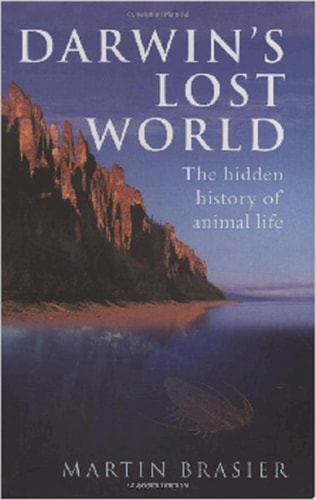
Darwin's Lost World: The Hidden History of Animal Life
0
0
As an Amazon Associate and affiliate partner, Menrva Books earns from qualifying purchases. Learn more
Author Description
Darwin made a powerful argument for evolution in the Origin of Species, based on all the evidence available to him. But a few things puzzled him. One was how inheritance works - he did not know about genes. This book concerns another of Darwin's Dilemmas, and the efforts of modern palaeontologists to solve it. What puzzled Darwin is that the most very ancient rocks, before the Cambrian, seemed to be barren, when he would expect them to be teeming with life. Darwin speculated that this was probably because the fossils had not been found yet. Decades of work by modern palaeontologists have indeed brought us amazing fossils from far beyond the Cambrian, from the depths of the Precambrian, so life was certainly around. Yet the fossils are enigmatic, and something does seem to happen around the Cambrian to speed up evolution drastically and produce many of the early forms of animals we know today. In this book, Martin Brasier, a leading palaeontologist working on early life, takes us into the deep, dark ages of the Precambrian to explore Darwin's Lost World. Decoding the evidence in these ancient rocks, piecing together the puzzle of what happened over 540 million years ago to drive what is known as the Cambrian Explosion, is very difficult. The world was vastly different then from the one we know now, and we are in terrain with few familiar landmarks. Brasier is a master storyteller, and combines the account of what we now know of the strange creatures of these ancient times with engaging and amusing anecdotes from his expeditions to Siberia, Outer Mongolia, Barbuda, and other places, giving a vivid impression of the people, places, and challenges involved in such work. He ends by presenting his own take on the Cambrian Explosion, based on the picture emerging from this very active field of research. A vital clue involves worms - burrowing worms are one of the key signs of the start of the Cambrian. This is fitting: Darwin was inordinately fond of worms.
Menrva's Summary
THE THESIS
This book investigates the biological and geological mechanisms behind the Cambrian Explosion, specifically addressing why the fossil record appears to accelerate so dramatically after the Precambrian period. Martin Brasier, a distinguished professor of paleobiology, utilizes his extensive field experience and expertise in early life forms to synthesize modern paleontological findings. He constructs a framework that bridges the gap between Darwin's original observations and contemporary discoveries regarding the emergence of complex animal life.
THE SCOPE MAP
What You Will Find
- Analysis of Precambrian fossil evidence and the transition into the Cambrian period.
- Examination of the role of burrowing organisms in biological evolution.
- First-hand accounts of paleontological expeditions in diverse global locations including Siberia and Mongolia.
- Theoretical models explaining the rapid diversification of early animal life.
Scope Limits
- The text does not provide a comprehensive history of all evolutionary biology, focusing strictly on the Precambrian-Cambrian transition.
- It does not cover the molecular mechanisms of inheritance or genetics in detail.
THE AUTHORITY PERSPECTIVE
Experts recognize this work as a significant contribution to the study of early life, noting that Brasier successfully balances technical geological data with accessible narrative prose. Readers frequently highlight the book's ability to contextualize complex scientific debates for a general audience while maintaining academic rigor.
Page Count:
327
Publication Date:
2010-01-01
Publisher:
OUP Oxford
ISBN-10:
0191613908
ISBN-13:
9780191613906
Science
Natural History
Geology
Paleontology
Evolutionary Biology
Mathematics - General
Community Tags
Other Editions(2)
Similar Books
Reader Comments
Share Your Thoughts
No comments yet. Be the first to share your thoughts!