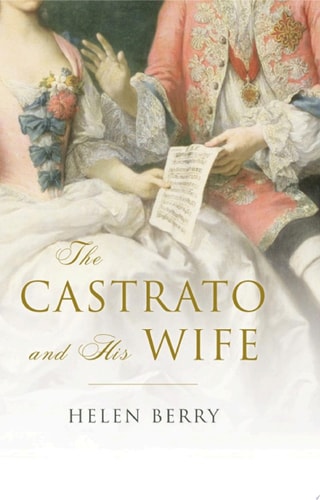
The Castrato and His Wife
0
0
As an Amazon Associate and affiliate partner, Menrva Books earns from qualifying purchases. Learn more
Author Description
The opera singer Giusto Ferdinando Tenducci was one of the most famous celebrities of the eighteenth century. In collaboration with the English composer Thomas Arne, he popularized Italian opera, translating it for English audiences and making it accessible with his own compositions which he performed in London's pleasure gardens. Mozart and J. C. Bach both composed for him. He was a rock star of his day, with a massive female following. He was also a castrato. Women flocked to his concerts and found him irresistible. His singing pupil, Dorothea Maunsell, a teenage girl from a genteel Irish family, eloped with him. There was a huge scandal; her father persecuted them mercilessly. Tenducci's wife joined him at his concerts, achieving a status as a performer she could never have dreamed of as a respectable girl. She also wrote a sensational account of their love affair, an early example of a teenage novel. Embroiled in debt, the Tenduccis fled to Italy, and the marriage collapsed when she fell in love with another man. There followed a highly publicized and unique marriage annulment case in the London courts. Everything hinged on the status of the marriage; whether the husband was capable of consummation, and what exactly had happened to him as a small boy in a remote Italian hill village decades before. Ranging from the salons of princes and the grand opera houses of Europe to the remote hill towns of Tuscany, the unconventional love story of the castrato and his wife affords a fascinating insight into the world of opera and the history of sex and marriage in Georgian Britain, while also exploring questions about the meaning of marriage that continue to resonate in our own time.
Menrva's Summary
THE THESIS
This work investigates the intersection of celebrity, gender, and the legal definition of marriage in eighteenth-century Britain through the lens of the life of opera singer Giusto Ferdinando Tenducci. Helen Berry, a professor of British history, utilizes extensive archival research, including court records and personal accounts, to reconstruct the lives of Tenducci and his wife, Dorothea Maunsell. The book argues that their scandalous elopement and subsequent annulment trial serve as a critical case study for understanding the social anxieties surrounding castrati and the evolving expectations of marital legitimacy in the Georgian era.
THE SCOPE MAP
What You Will Find
- Detailed analysis of the eighteenth-century London opera scene and the role of pleasure gardens.
- Examination of the legal proceedings surrounding the annulment of a marriage involving a castrato.
- Historical context regarding the cultural status of castrati in European society.
- Primary source material including Dorothea Maunsell's own account of the relationship.
Scope Limits
- The narrative focuses primarily on the British legal and social context rather than a comprehensive biography of all composers who worked with Tenducci.
- The text does not provide a technical musical analysis of Tenducci's vocal performances.
THE AUTHORITY PERSPECTIVE
Historians and critics recognize this work as a meticulous reconstruction of a complex social scandal that illuminates broader cultural attitudes toward gender and performance. Readers frequently note the balance between the narrative accessibility of the couple's personal story and the academic rigor applied to the legal and historical analysis.
Page Count:
327
Publication Date:
2011-01-01
Publisher:
OUP Oxford
ISBN-10:
0191620181
ISBN-13:
9780191620188
History
Biography
Social History
Cultural History
Music History
18th century
Marriage history
Humanities
Community Tags
Other Editions(4)
Similar Books
Reader Comments
Share Your Thoughts
No comments yet. Be the first to share your thoughts!