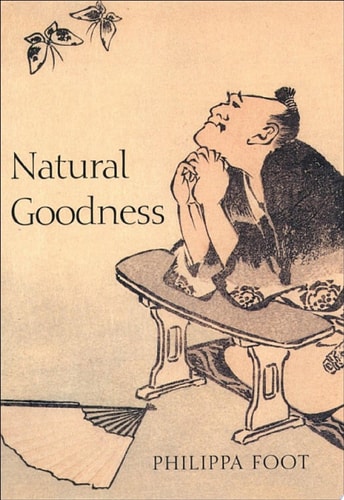
Natural Goodness
0
0
As an Amazon Associate and affiliate partner, Menrva Books earns from qualifying purchases. Learn more
Author Description
Philippa Foot has for many years been one of the most distinctive and influential thinkers in moral philosophy. Long dissatisfied with the moral theories of her contemporaries, she has gradually evolved a theory of her own that is radically opposed not only to emotivism and prescriptivism but also to the whole subjectivist, anti-naturalist movement deriving from David Hume. Dissatisfied also with both Kantian and utilitarian ethics, she claims to have isolated a special form of evaluation that predicates goodness and defect only to living things considered as such: she finds this form of evaluation in moral judgements. Her vivid discussion ranges over topics such as practical rationality, erring conscience, and the relation between virtue and happiness, ending with a critique of Nietzsche's immoralism. Natural Goodness is the long-awaited exposition of a highly original approach to moral philosophy, representing a fundamental break away from the assumptions of recent debates. Foot challenges many prominent philosophical arguments and attitudes; hers is not, however, a work of dry theory, but full of life and feeling, written for anyone intrigued by the deepest questions about goodness and human life. This beautifully written book offers a new beginning for moral philosophy.
Menrva's Summary
THE THESIS
Philippa Foot investigates whether moral goodness can be understood as a form of natural goodness inherent to human life, rather than as a product of subjective preference or abstract rationalism. Foot, a prominent figure in 20th-century moral philosophy, draws upon Aristotelian concepts to argue that moral evaluations are essentially evaluations of living things. She challenges the prevailing anti-naturalist, emotivist, and subjectivist traditions by proposing that human virtue is grounded in the natural requirements of human life.
THE SCOPE MAP
What You Will Find
- An analysis of natural goodness as it applies to plants, animals, and humans
- A critique of Humean, Kantian, and utilitarian ethical frameworks
- Discussions on practical rationality and the nature of an erring conscience
- An examination of the relationship between virtue and human happiness
- A critical assessment of Nietzschean immoralism
Scope Limits
- The text does not provide a comprehensive history of moral philosophy
- It does not offer a prescriptive guide for specific modern political policy decisions
THE AUTHORITY PERSPECTIVE
Philosophers and students of ethics frequently cite this work as a foundational text for virtue ethics and naturalism. Readers often note the clarity and accessibility of the prose despite the significant density of the philosophical arguments presented.
Page Count:
136
Publication Date:
2003-01-01
Publisher:
Clarendon Press
ISBN-10:
0191622915
ISBN-13:
9780191622915
Non-Fiction
Philosophy
Ethics
Moral Philosophy
Community Tags
Other Editions(4)


Similar Books