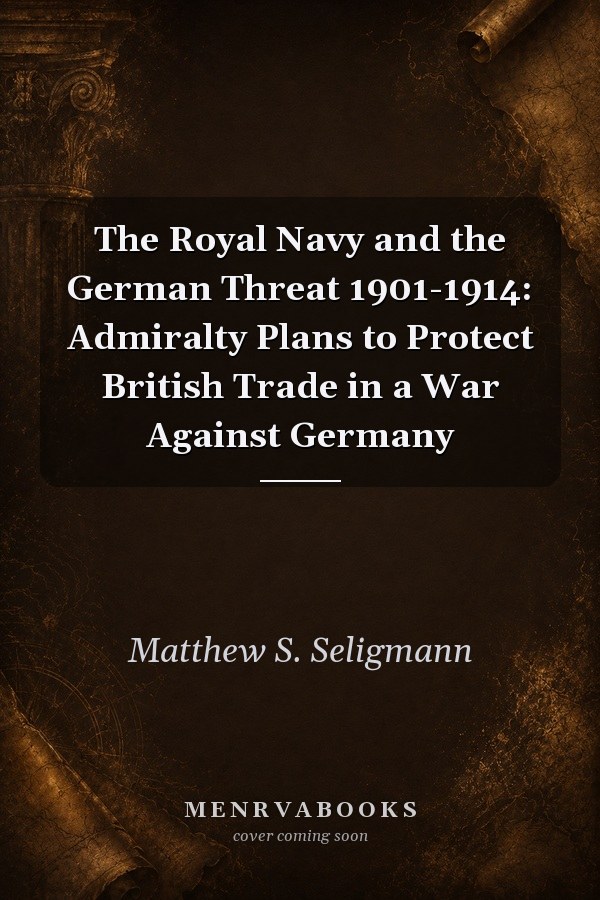
The Royal Navy and the German Threat 1901-1914: Admiralty Plans to Protect British Trade in a War Against Germany
0
0
As an Amazon Associate and affiliate partner, Menrva Books earns from qualifying purchases. Learn more
Author Description
When And Why Did The Royal Navy Come To View The Expansion Of German Maritime Power As A Threat To British Maritime Security? Contrary To Current Thinking, Matthew S. Seligmann Argues That Germany Emerged As A Major Threat At The Outset Of The Twentieth Century, Not Because Of Its Growing Battle Fleet, But Because The British Admiralty (rightly) Believed That Germany's Naval Planners Intended To Arm Their Country's Fast Merchant Vessels In Wartime And Send Them Out To Attack British Trade In The Manner Of The Privateers Of Old. This Threat To British Seaborne Commerce Was So Serious That The Leadership Of The Royal Navy Spent Twelve Years Trying To Work Out How Best To Counter It. Ever More Elaborate Measures Were Devised To This End. These Included Building 'fighting Liners'to Run Down The German Ones; Devising A Specialized Warship, The Battle Cruiser, As A Weapon Of Trade Defence; Attempting To Change International Law To Prohibit The Conversion Of Merchant Vessels Into Warships On The High Seas; Establishing A Global Intelligence Network To Monitor German Shipping Movements; And, Finally, The Arming Of British Merchant Vessels In Self-defence. The Manner In Which German Schemes For Commerce Warfare Drove British Naval Policy For Over A Decade Before 1914 Has Not Been Recognized Before. The Royal Navy And The German Threat Illustrates A New And Important Aspect Of British Naval History.
Menrva's Summary
THE THESIS
This book investigates the primary drivers of British naval policy between 1901 and 1914, specifically challenging the consensus that the Anglo-German naval arms race was defined solely by battleship construction. Matthew S. Seligmann, a historian specializing in naval strategy, utilizes declassified Admiralty records and intelligence reports to argue that the British fear of German commerce raiding—specifically the conversion of fast merchant vessels into armed cruisers—was the true catalyst for British strategic planning. He demonstrates how this specific threat dictated the development of new warship classes, international legal maneuvers, and global intelligence networks long before the outbreak of the First World War.
THE SCOPE MAP
What You Will Find
- Analysis of German 'Handelskrieg' (commerce warfare) doctrines.
- Examination of the origins of the battle cruiser class, including HMS Invincible.
- Documentation of British efforts to alter international maritime law regarding merchant vessel conversion.
- Details on the establishment of a global intelligence network to track German shipping.
- Case studies on the impact of the Cunard agreement and the role of 'fighting liners.'
Scope Limits
- The text focuses primarily on Admiralty planning and strategic policy rather than tactical naval engagements.
- It does not provide a comprehensive history of the entire German High Seas Fleet or broader geopolitical relations outside of naval security.
THE AUTHORITY PERSPECTIVE
Historians and naval scholars recognize this work as a significant revisionist contribution to the study of pre-WWI naval strategy. Readers frequently note the academic density of the prose and the meticulous use of primary source documentation to support the author's arguments.
Page Count:
0
Publication Date:
2012-01-01
Publisher:
Oxford University Press
ISBN-10:
0191624489
ISBN-13:
9780191624483
History
Naval history
Germany
Military History
Great Britain
20th Century
Sea-power
British History
Community Tags
Similar Books