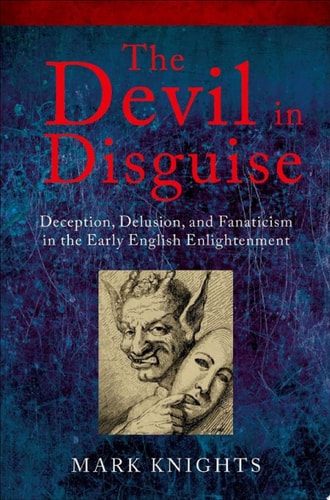
The Devil in Disguise: Deception, Delusion, and Fanaticism in the Early English Enlightenment
0
0
As an Amazon Associate and affiliate partner, Menrva Books earns from qualifying purchases. Learn more
Author Description
The Devil in Disguise illuminates the impact of the two British revolutions of the seventeenth century and the shifts in religious, political, scientific, literary, economic, social, and moral culture that they brought about. It does so through the fascinating story of one family and their locality: the Cowpers of Hertford. Their dramatic history contains a murder mystery, bigamy, a scandal novel, and a tyrannized wife, all set against a backdrop of violently competing local factions, rampant religious prejudice, and the last conviction of a witch in England. Spencer Cowper was accused of murdering a Quaker, and his brother William had two illegitimate children by his second 'wife'. Their scandalous lives became the source of public gossip, much to the horror of their mother, Sarah, who poured out her heart in a diary that also chronicles her feeling of being enslaved to her husband. Her two sons remained in the limelight. Both were instrumental in the prosecution of Henry Sacheverell, a firebrand cleric who preached a sermon about the illegitimacy of resistance and religious toleration. His parliamentary trial in 1710 provoked serious riots in London. William Cowper also intervened in 1712 to secure the life of Jane Wenham, whose trial provoked a wide-ranging debate about witchcraft beliefs. The Cowpers and their town are a microcosm of a changing world. Their story suggests that an early 'Enlightenment', far from being simply a movement of ideas sparked by 'great thinkers', was shaped and advanced by local and personal struggles.
Menrva's Summary
THE THESIS
This work investigates how the early English Enlightenment was shaped not merely by intellectual discourse, but by the volatile personal and local struggles of individuals during a period of profound societal transition. Mark Knights, a professor of history, utilizes the specific case study of the Cowper family of Hertford to examine the intersection of political, religious, and social shifts following the seventeenth-century British revolutions. By analyzing private diaries, legal records, and public discourse, the author argues that the Enlightenment was a lived experience defined by local factionalism and moral upheaval.
THE SCOPE MAP
What You Will Find
- Analysis of the Cowper family history, including legal scandals and domestic conflicts.
- Examination of the 1710 trial of Henry Sacheverell and its role in London riots.
- Investigation into the 1712 trial of Jane Wenham and the decline of witchcraft beliefs.
- Contextualization of early Enlightenment values within local political and religious frameworks.
Scope Limits
- The study is geographically centered on the Cowper family and their locality of Hertford.
- It does not provide a comprehensive survey of continental European Enlightenment thought.
THE AUTHORITY PERSPECTIVE
Historians frequently cite this work for its ability to bridge the gap between micro-history and broader cultural shifts in early modern England. Scholars note that the text provides a detailed, evidence-based look at how personal scandal and local politics influenced the national trajectory of the Enlightenment.
Page Count:
302
Publication Date:
2011-01-01
Publisher:
OUP Oxford
ISBN-10:
0191624977
ISBN-13:
9780191624971
Biography
History
18th century
Great Britain
17th Century
European History
British History
Enlightenment
Social History
Community Tags
Similar Books