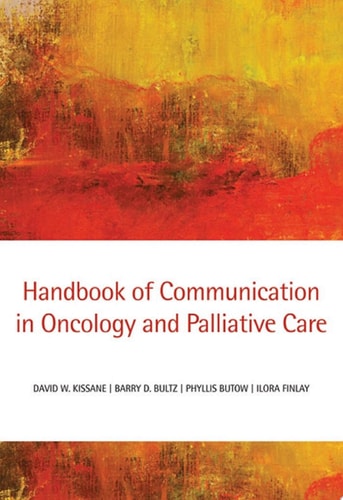
Handbook of Communication in Oncology and Palliative Care
0
0
As an Amazon Associate and affiliate partner, Menrva Books earns from qualifying purchases. Learn more
Author Description
This Comprehensive Text Provides Clinicians With Practical And Evidence-based Guidelines To Achieve Effective, Patient-centered Communication In The Areas Of Cancer And Palliative Care. Written By An Outstanding Panel Of International Experts, It Integrates Empirical Findings With Clinical Wisdom, Draws On Historical Approaches And Presents A State-of-the-art Curriculum For Applied Communication Skills Training For The Specialist Oncologist, Surgeon, Nurse And Other Multi-disciplinary Team Members Involved In Cancer Care Today. In This Book Communication Is Broken Down Into Key Modules That Cover The Life-cycle Of Cancer Care. They Include Coverage Of Diagnosis And Treatment Including Clinical Trials, Empathic Support In Response To Distress, Transition To Survivorship Or Palliative Therapies, Discussion Of Prognosis, Conduct Of Family Meetings, And Care Of The Dying. Complementary Training Of Patients In Their Communication With The Doctor Completes The Interactive Dyad. The Art Of Teaching, Impact Of Gender And Power In The Consultation And The Ethical Context Are Carefully Considered. Special Communication Challenges Include Discussion Of Genetic Risk, Rehabilitative And Salvage Surgery, Promotion Of Treatment Adherence, Unanticipated Adverse Outcomes, Intercultural Issues, Fertility And Sexuality. The Value Of Decision Aides, Question Prompt Lists, Audio-recording Of Consultations And Use Of The Internet Is Illustrated. By Looking Across The Full Spectrum Of Disciplines Involved In The Multidisciplinary Team, Discipline-specific Issues Are Considered By Experts In Each Field. In This Manner, The Needs Of Patients And Their Relatives Are Evaluated, Including Paediatric And Geriatric Populations. To Achieve All Of This, Theoretical Models Are Examined From The Medical School To The Highly Specialized Practice, Facilitation Training And Actor Training Are Made Explicit, And International Approaches To Communication Skills Training Are Compared And Contrasted.
Menrva's Summary
THE THESIS
This text investigates the core question of how clinicians can implement evidence-based communication strategies to improve patient-centered care throughout the cancer trajectory. The authors, a panel of international experts in oncology and palliative medicine, synthesize empirical research and clinical practice to provide a comprehensive framework for multidisciplinary teams. The book argues that effective communication is a teachable skill that directly impacts patient outcomes, treatment adherence, and the quality of end-of-life care.
THE SCOPE MAP
What You Will Find
- Modules covering the full life-cycle of cancer care from diagnosis to survivorship or palliative transition.
- Methodologies for conducting family meetings, discussing prognosis, and managing distress.
- Analysis of specialized communication challenges including genetic risk, fertility, sexuality, and intercultural issues.
- Evaluation of tools such as decision aids, question prompt lists, and audio-recording of consultations.
Scope Limits
- The text does not provide clinical medical protocols for cancer treatment itself, focusing exclusively on the communicative aspects of care.
- It does not offer a singular universal communication style, but rather a range of approaches adaptable to different cultural and professional contexts.
THE AUTHORITY PERSPECTIVE
Experts recognize this work as a foundational resource for multidisciplinary teams seeking to formalize communication training within clinical settings. Readers frequently note the academic density of the prose, which serves as a comprehensive reference for both medical students and highly specialized practitioners.
Page Count:
772
Publication Date:
2011-01-01
Publisher:
Oup Oxford
ISBN-10:
0191620815
ISBN-13:
9780191620812
Psychology
Oncology
Nursing
Communication Skills
Medical
Community Tags
Similar Books





Reader Comments
Share Your Thoughts
No comments yet. Be the first to share your thoughts!