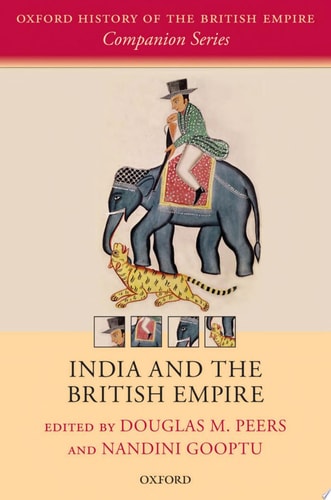
India and the British Empire
0
0
As an Amazon Associate and affiliate partner, Menrva Books earns from qualifying purchases. Learn more
Author Description
South Asian History Has Enjoyed A Remarkable Renaissance Over The Past Thirty Years. Its Historians Are Not Only Producing New Ways Of Thinking About The Imperial Impact And Legacy On South Asia, But Also Helping To Reshape The Study Of Imperial History In General. The Essays In This Collection Address A Number Of These Important Developments, Delineating Not Only The Complicated Interplay Between Imperial Rulers And Their Subjects In India, But Also Illuminating The Economic, Political, Environmental, Social, Cultural, Ideological, And Intellectual Contexts Which Informed, And Were In Turn Informed By, These Interactions. Particular Attention Is Paid To A Cluster Of Binary Oppositions That Have Hitherto Framed South Asian History, Namely Colonizer/colonized, Imperialism/nationalism, And Modernity/tradition, And How New Analytical Frameworks Are Emerging Which Enable Us To Think Beyond The Constraints Imposed By These Binaries. Closer Attention To Regional Dynamics As Well As To Wider Global Forces Has Enriched Our Understanding Of The History Of South Asia Within A Wider Imperial Matrix. Previous Impressions Of All-powerful Imperialism, With The Capacity To Reshape All Before It, For Good Or Ill, Are Rejected In Favour Of A Much More Nuanced Image Of Imperialism In India That Acknowledges The Impact As Well As The Intentions Of Colonialism, But Within A Much More Complicated Historical Landscape Where Other Processes Are At Work.
Menrva's Summary
THE THESIS
This collection of essays investigates how recent historiographical developments have reshaped our understanding of the British Empire's impact on South Asia and the broader imperial matrix. The authors, Douglas M. Peers and Nandini Gooptu, curate a series of scholarly contributions that move beyond traditional binary oppositions like colonizer versus colonized. By integrating regional dynamics with global forces, the text argues for a more nuanced interpretation of colonial history that accounts for complex social, economic, and intellectual interactions rather than viewing imperialism as an all-powerful, monolithic force.
THE SCOPE MAP
What You Will Find
- Analysis of the interplay between imperial administrators and South Asian subjects
- Examination of economic, environmental, and ideological contexts of colonial rule
- Critical reassessment of historical binaries including modernity and tradition
- Integration of regional and global historical perspectives
Scope Limits
- Does not provide a comprehensive chronological narrative of British rule in India
- Does not focus on military history or specific biographical accounts of colonial figures
THE AUTHORITY PERSPECTIVE
Scholars and students of South Asian history frequently cite this collection as a significant contribution to the post-colonial historiographical shift. Readers often note the academic density of the prose, which is intended for those already familiar with the foundational debates in imperial studies.
Page Count:
384
Publication Date:
2012-01-01
Publisher:
Oup Oxford
ISBN-10:
0191632090
ISBN-13:
9780191632099
History
British Empire
Academic
Imperialism
Colonialism
Asian History
Community Tags
Other Editions(5)

Similar Books

Reader Comments
Share Your Thoughts
No comments yet. Be the first to share your thoughts!