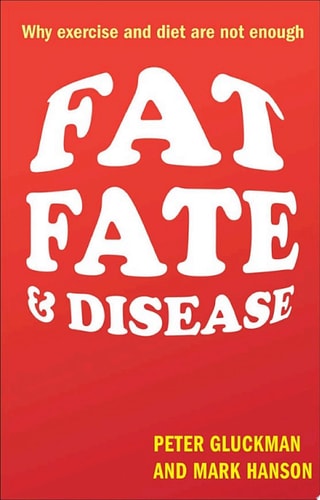
Fat, Fate, and Disease: Why exercise and diet are not enough
0
0
As an Amazon Associate and affiliate partner, Menrva Books earns from qualifying purchases. Learn more
Author Description
'Why are we losing the war against obesity and chronic disease?' This is the simple question Peter Gluckman and Mark Hanson ask, exploring the dominant myth that the exploding epidemic of obesity, heart disease, and diabetes can be tackled by focusing on adult life styles. Addressing the flawed approach of the weight-loss industry, they explain why a continued focus simply on diet and exercise will fail. Highlighting the implications of the growing burden of these problems in the developing world, they show that the scientific enterprise ignores the reality of the social, cultural, and biological determinants that make different populations and people respond differently to living in the modern nutritionally rich world. Gluckman and Hanson review the overwhelming scientific evidence that much of the problem emerges in early life and even before birth, identifying that to address these issues requires considering development in two dimensions - a life course approach and addressing the developmental challenges of countries emerging through the socioeconomic transition. Asking why the major global bodies and vested interests fail to consider these dimensions and continue with failed approaches, they conclude by discussing the complex interactions between health and the food industry, and suggest that the food industry must be co-opted as an ally in this battle, providing a clear pathway forward.
Menrva's Summary
THE THESIS
Why are current public health strategies failing to curb the global epidemic of obesity and chronic disease? Authors Peter Gluckman and Mark Hanson, both experts in developmental biology and medicine, argue that the prevailing focus on adult lifestyle choices like diet and exercise is fundamentally flawed. They propose a life-course approach that accounts for biological, social, and cultural determinants established before birth and during early development.
THE SCOPE MAP
What You Will Find
- Analysis of the developmental origins of health and disease (DOHaD) framework.
- Examination of socioeconomic transitions in developing nations and their impact on metabolic health.
- Critique of the weight-loss industry and current global health policy.
- Proposals for integrating the food industry into public health solutions.
Scope Limits
- The text does not provide specific meal plans or individual exercise regimens.
- It does not focus on acute medical interventions for existing chronic conditions.
THE AUTHORITY PERSPECTIVE
Experts in public health and developmental biology recognize this work as a significant challenge to the conventional individual-responsibility model of obesity. Readers frequently note the academic density of the prose, which provides a rigorous scientific foundation for shifting the focus toward early-life interventions.
Page Count:
299
Publication Date:
2012-01-01
Publisher:
OUP Oxford
ISBN-10:
0191632961
ISBN-13:
9780191632969
Health
Heart Diseases
Medicine
Public Health
Biology
Allied Health
Medical
Nutrition
Obesity
Sociology
Community Tags
Similar Books