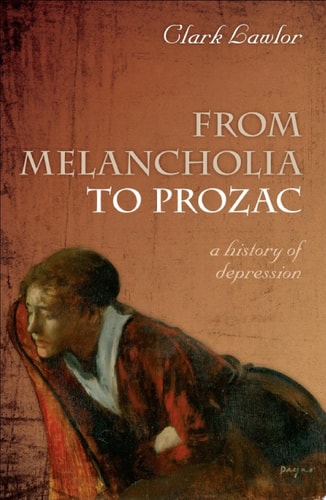
From Melancholia to Prozac: A History of Depression
0
0
As an Amazon Associate and affiliate partner, Menrva Books earns from qualifying purchases. Learn more
Author Description
Depression is an experience known to millions. But arguments rage on aspects of its definition and its impact on societies present and past: do drugs work, or are they merely placebos? Is the depression we have today merely a construct of the pharmaceutical industry? Is depression under- or over-diagnosed? Should we be paying for expensive 'talking cure' treatments like psychoanalysis or Cognitive Behavioural Therapy? Here, Clark Lawlor argues that understanding the history of depression is important to understanding its present conflicted status and definition. While it is true that our modern understanding of the word 'depression' was formed in the late nineteenth and early twentieth centuries, the condition was originally known as melancholia, and characterised by core symptoms of chronic causeless sadness and fear. Beginning in the Classical period, and moving on to the present, Lawlor shows both continuities and discontinuities in the understanding of what we now call depression, and in the way it has been represented in literature and art. Different cultures defined and constructed melancholy and depression in ways sometimes so different as to be almost unrecognisable. Even the present is still a dynamic history, in the sense that the 'new' form of depression, defined in the 1980s and treated by drugs like Prozac, is under attack by many theories that reject the biomedical model and demand a more humanistic idea of depression - one that perhaps returns us to a form of melancholy.
Menrva's Summary
THE THESIS
This book investigates the historical evolution of depression, questioning whether modern definitions are objective medical realities or cultural constructs. Clark Lawlor, an academic specializing in the history of medicine and literature, utilizes a chronological framework to trace the transition from the classical concept of melancholia to the contemporary biomedical model. He argues that by examining the shifting representations of this condition across centuries, one can better understand the current debates surrounding diagnosis, pharmaceutical intervention, and the efficacy of psychological therapies.
THE SCOPE MAP
What You Will Find
- A historical survey of depression from the Classical period to the late twentieth century.
- An analysis of how literature and art have shaped the public perception of mental illness.
- A critical examination of the pharmaceutical industry's influence on modern diagnostic criteria.
- A comparison between the biomedical model and humanistic approaches to mental health.
Scope Limits
- The text does not provide clinical advice or treatment protocols for individuals currently experiencing depression.
- It does not offer an exhaustive medical history of all psychiatric disorders, focusing specifically on the evolution of depression and melancholia.
THE AUTHORITY PERSPECTIVE
Experts and readers frequently note the academic rigor of Lawlor's prose, which effectively bridges the gap between medical history and cultural studies. The text is widely regarded as a useful resource for those seeking to understand the socio-historical context of modern psychiatric definitions.
Page Count:
278
Publication Date:
2012-01-01
Publisher:
OUP Oxford
ISBN-10:
0191633860
ISBN-13:
9780191633867
Psychology
History
Non-Fiction
Mental Health
Earth Sciences
MEDICAL History