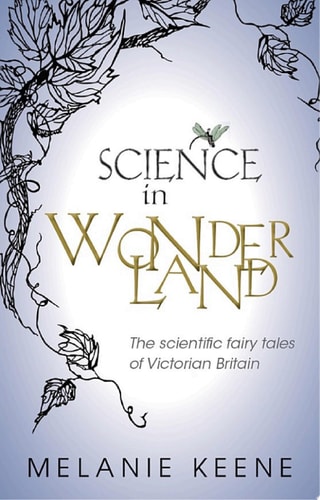
Science in Wonderland: The Scientific Fairy Tales of Victorian Britain
0
0
As an Amazon Associate and affiliate partner, Menrva Books earns from qualifying purchases. Learn more
Author Description
In Victorian Britain an array of writers captured the excitement of new scientific discoveries, and enticed young readers and listeners into learning their secrets, by converting introductory explanations into quirky, charming, and imaginative fairy-tales; forces could be fairies, dinosaurs could be dragons, and looking closely at a drop of water revealed a soup of monsters. Science in Wonderland explores how these stories were presented and read. Melanie Keene introduces and analyses a range of Victorian scientific fairy-tales, from nursery classics such as The Water-Babies to the little-known Wonderland of Evolution, or the story of insect lecturer Fairy Know-a-Bit. In exploring the ways in which authors and translators - from Hans Christian Andersen and Edith Nesbit to the pseudonymous 'A.L.O.E.' and 'Acheta Domestica' - reconciled the differing demands of factual accuracy and fantastical narratives, Keene asks why the fairies and their tales were chosen as an appropriate new form for capturing and presenting scientific and technological knowledge to young audiences. Such stories, she argues, were an important way in which authors and audiences criticised, communicated, and celebrated contemporary scientific ideas, practices, and objects.
Menrva's Summary
THE THESIS
This book investigates why Victorian authors utilized the fairy tale genre as a primary vehicle for communicating complex scientific and technological concepts to young audiences. Melanie Keene, a historian of science, examines how writers reconciled the tension between empirical accuracy and imaginative narrative. By analyzing a diverse range of texts, she argues that these stories served as a critical cultural mechanism for debating, disseminating, and celebrating the rapid scientific advancements of the nineteenth century.
THE SCOPE MAP
What You Will Find
- Analysis of Victorian scientific fairy tales including 'The Water-Babies' and 'Wonderland of Evolution'.
- Examination of authors and translators such as Hans Christian Andersen, Edith Nesbit, and 'A.L.O.E.'.
- Exploration of the metaphorical transformation of scientific forces into mythological entities like dragons and fairies.
Scope Limits
- The study focuses specifically on British literature and culture during the Victorian era.
- It does not provide a comprehensive history of science education outside of the fairy tale literary tradition.
THE AUTHORITY PERSPECTIVE
Scholars and historians of Victorian literature frequently cite this work for its meticulous archival research and its nuanced understanding of nineteenth-century pedagogical methods. Experts highlight the text as a significant contribution to the study of how scientific communication evolved through popular literary forms.
Page Count:
241
Publication Date:
2015-01-01
Publisher:
OUP Oxford
ISBN-10:
0191639648
ISBN-13:
9780191639647
Children's
History
Victorian
Science History
Earth Sciences
Cultural History
Great Britain
Literary Criticism
Community Tags
Other Editions(2)
Similar Books