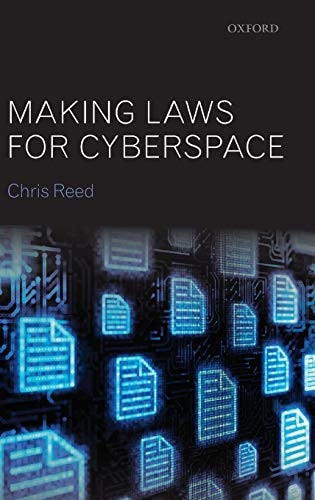
Making Laws for Cyberspace
0
0
As an Amazon Associate and affiliate partner, Menrva Books earns from qualifying purchases. Learn more
Author Description
Providing a scholarly analysis of how to govern and make the right kinds of laws for cyberspace, in this work, Professor Reed investigates the vast majority of cyberspace users who wish to act lawfully and asks whether the current state of law in cyberspace makes it possible for them to do so. If not, why not, and what is the cure? In this book, Professor Reed puts forward a new model for cyberspace laws which focuses on human actions rather than the technology used. Arguing that, in cyberspace, law works primarily through voluntary obedience rather than fear of enforcement, Professor Reed explains his thoughtful and controversial new viewpoint as to how cyberspace laws should be devised and re-opens the debate as to the value of law for regulating cyberspace and how best to influence the behaviour of cyberspace actors. The only text to comprehensively analyse European cyberspace lawmaking, this book provides a new perspective to the debate about the proper shape and scope of internet laws.
Menrva's Summary
THE THESIS
This work investigates whether the current legal framework governing cyberspace enables users to act lawfully and proposes a new model for regulation based on human behavior rather than technological infrastructure. Professor Chris Reed, a legal scholar, examines the disconnect between existing legislative approaches and the practical realities of internet usage. He argues that effective regulation in the digital sphere relies more on voluntary compliance than on traditional enforcement mechanisms, advocating for a shift in how lawmakers approach digital policy.
THE SCOPE MAP
What You Will Find
- A comprehensive analysis of European cyberspace lawmaking.
- A proposed model for lawmaking centered on human action.
- An examination of the role of voluntary obedience in digital environments.
Scope Limits
- The text does not provide a technical manual for cybersecurity implementation.
- It does not cover non-European legal jurisdictions in exhaustive detail.
THE AUTHORITY PERSPECTIVE
Legal scholars and policy experts recognize this text as a significant contribution to the discourse on internet governance. Readers frequently note the academic density of the prose and the author's focus on the philosophical underpinnings of digital regulation.
Page Count:
269
Publication Date:
2012-01-01
Publisher:
OUP Oxford
ISBN-10:
0191631914
ISBN-13:
9780191631917
Technology
Cybersecurity
Internet
Public Policy
Law
Professional Career & Trade
European Law