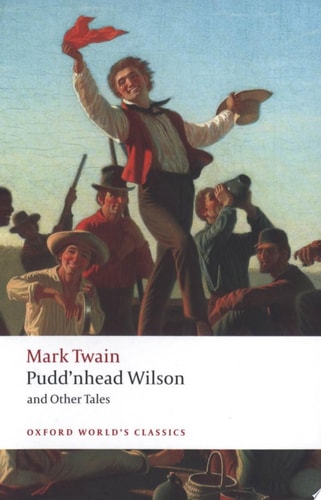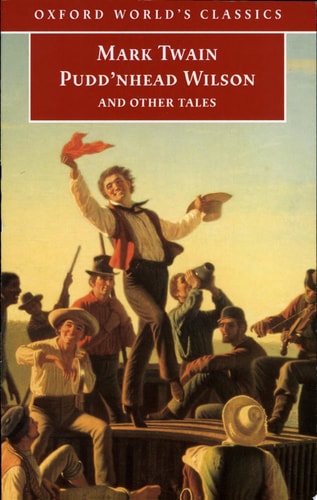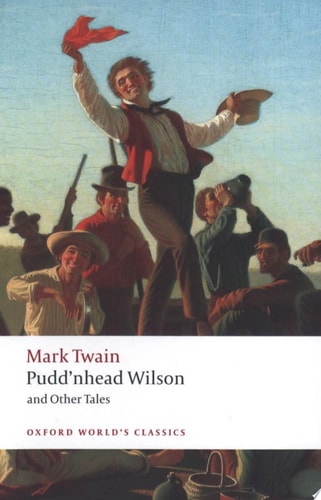
Pudd'nhead Wilson and Other Tales
0
0
As an Amazon Associate and affiliate partner, Menrva Books earns from qualifying purchases. Learn more
Author Description
Pudd'nhead Wilson (1894) Was Mark Twain's Last Serious Work Of Fiction, And Perhaps The Only Real Novel That He Ever Produced. Written In A More Sombre Vein Than His Other Mississippi Writings, The Novel Reveals The Sinister Forces That Mark Twain Felt To Be Threatening The American Dream. In Spite Of A Plot Which Includes Child Swapping, Palmistry, And A Pair Of Italian Twins, This Astringent Work Also Raises The Serious Issue Of Racial Differences. This Volume Also Includes Two Other Late Works `those Extraordinary Twins' And `the Man That Corrupted Hadleyburg'. About The Series: For Over 100 Years Oxford World's Classics Has Made Available The Widest Range Of Literature From Around The Globe. Each Affordable Volume Reflects Oxford's Commitment To Scholarship, Providing The Most Accurate Text Plus A Wealth Of Other Valuable Features, Including Expert Introductions By Leading Authorities, Helpful Notes To Clarify The Text, Up-to-date Bibliographies For Further Study, And Much More.
Menrva's Summary
THE PULSE
A legal and social crisis unfolds in a Missouri town when a lawyer’s hobby of fingerprinting leads to the exposure of a long-hidden identity swap. David Wilson, a newcomer labeled a fool by the local community, observes the town’s inhabitants with scientific detachment while the lives of two boys—one born into slavery and one born to a wealthy master—are surreptitiously exchanged by a desperate mother. The narrative explores the rigid constraints of antebellum Southern society, utilizing a third-person omniscient perspective to dissect the hypocrisy and racial prejudices inherent in the town’s social hierarchy. Wilson’s objective, though initially passive, becomes the catalyst for unraveling the complex web of deception that defines the lives of the townspeople.
INSIDE THE PAGES
- Use of early forensic science as a plot device
- Satirical examination of Southern social structures
- Exploration of the nature versus nurture debate
- Integration of dark humor and irony
- Non-linear inclusion of related short works
- Focus on the legal and moral implications of identity
- Critique of the American Dream during the post-Civil War era
- Character-driven dialogue reflecting regional dialects
THE COLLECTIVE ECHO
Readers and critics frequently highlight the stark contrast between the novel’s comedic elements and its grim exploration of racial identity. Discussion often centers on Twain’s cynical view of human nature and the effectiveness of his critique regarding the social constructs of the nineteenth-century South. Many observers note that the pacing shifts significantly between the central mystery and the accompanying tales included in this volume. The work is often analyzed for its technical innovation in using fingerprinting as a narrative tool to resolve the central conflict. Scholars frequently emphasize that this text serves as a significant departure from the author’s earlier, more lighthearted regional writings.
Page Count:
320
Publication Date:
1992-01-01
Publisher:
Oxford University Press
ISBN-10:
0191646725
ISBN-13:
9780191646720
Historical Fiction
Satire
Social Commentary
Classic Literature
American